To say the weather was “unfavorable” would be a gross understatement. While we managed to squeeze in ALL of the fun during the day, the nighttime brought high winds and pelting rain. In fact, we had to take in our awning as the storms moved in so quickly, we had little time to react. Both Rob and I poked out heads outside in the middle of the night to make sure Kevin’s bits and pieces were still in tact, and not, in fact, flying off the camper. It is one of the biggest camping faux pas to scatter debris from your campsite across the campground. No one likes to wake up with someone else’s bathing suit hanging from their antenna or a camp chair flipped into their fire pit. Overall, no damage to the camper, just a very soggy campground and a weather forecast that included showers off and on for the rest of the day – nothing that would slow us down.
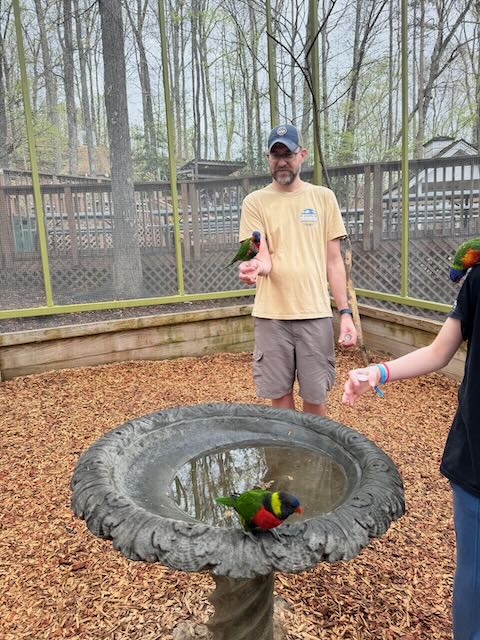
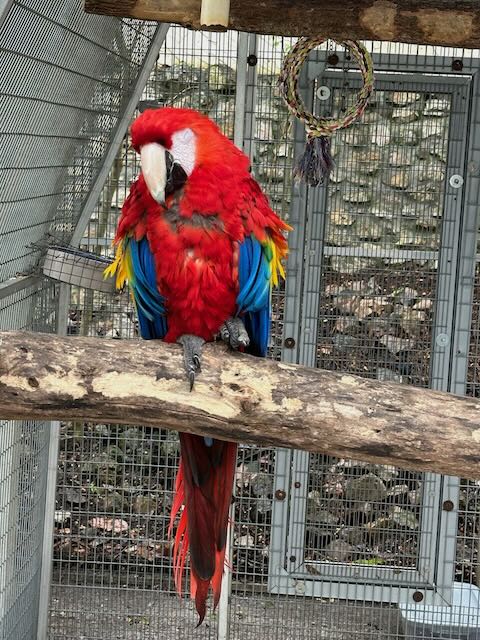
Any activity that includes animals is usually a winner for our group. Alyssa’s pick was Parrot Mountain and Garden of Eden, four acres tucked up in the mountains of Pigeon Forge with thousands of beautifully manicured flowers, plants and trees and hundreds of beautiful tropical birds. As we drove up the steep, winding driveway to the property, we couldn’t help but gawk at the gorgeous colors and lush landscape of the park. Picturesque stairs flanked by tropical birds on their perches led to the entrance. Ducking under thatched rooftops during the occasional cloudburst, we strolled along the treetop walkway admiring jays, macaws, cockatoos and more. Exotic birds in spacious enclosures with swings, balls, jungle gyms, perches, and feeders lined the pathways. Signs on the enclosures advised that the birds bite and not to touch the birds. Not surprisingly, the only person who needed reminding about keeping their hands to themselves was Rob.
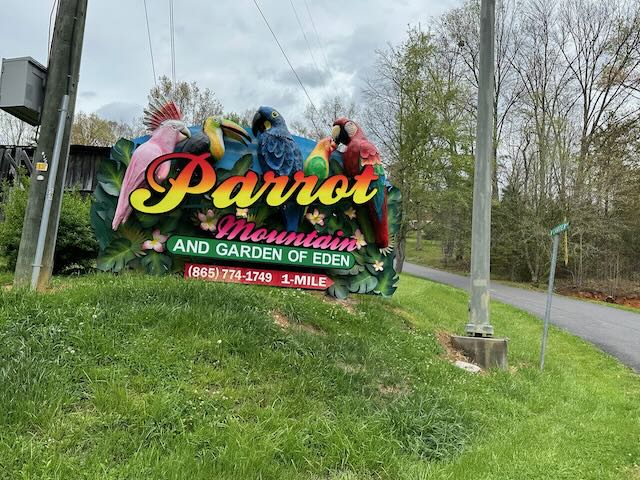
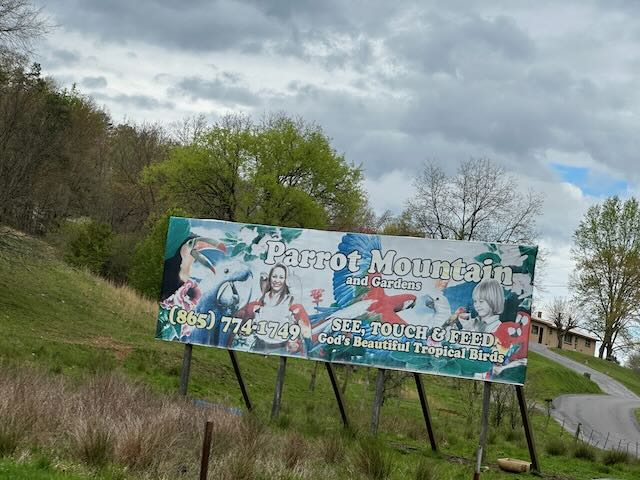
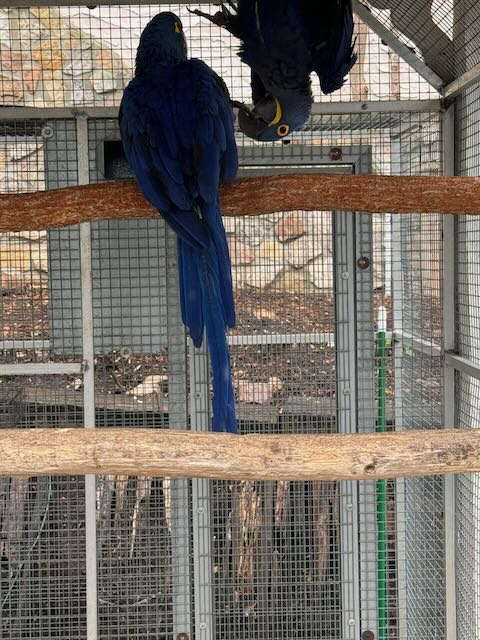
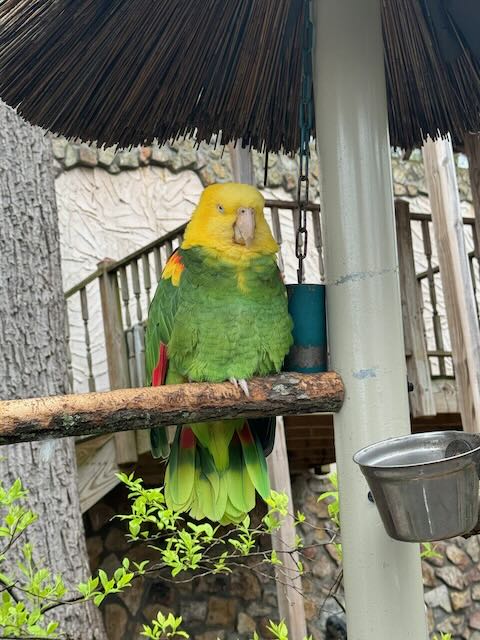
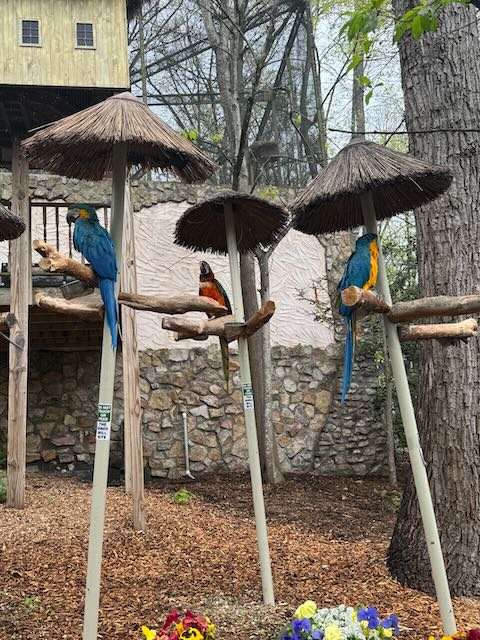
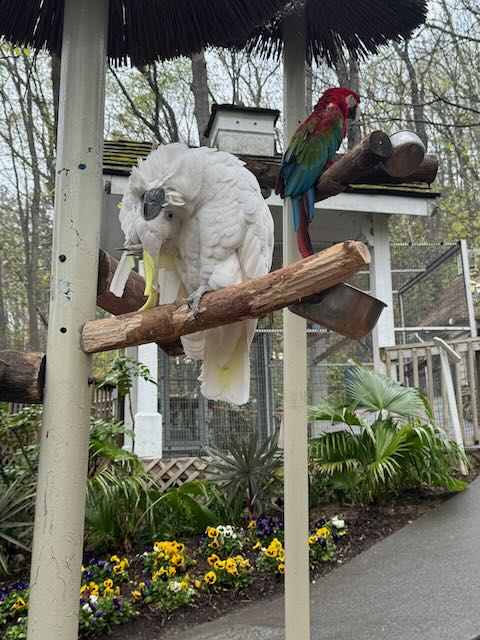
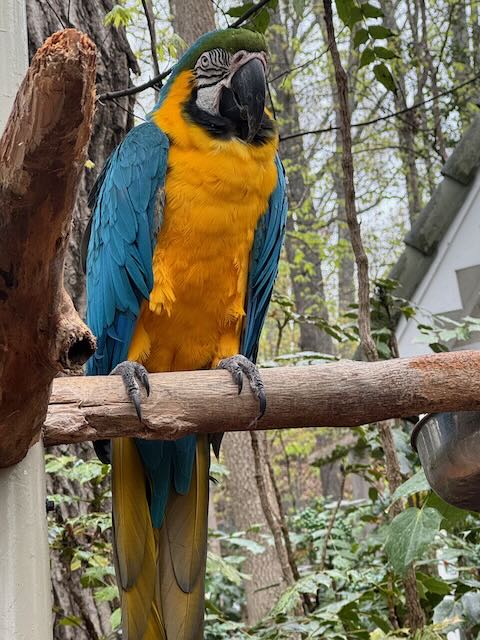
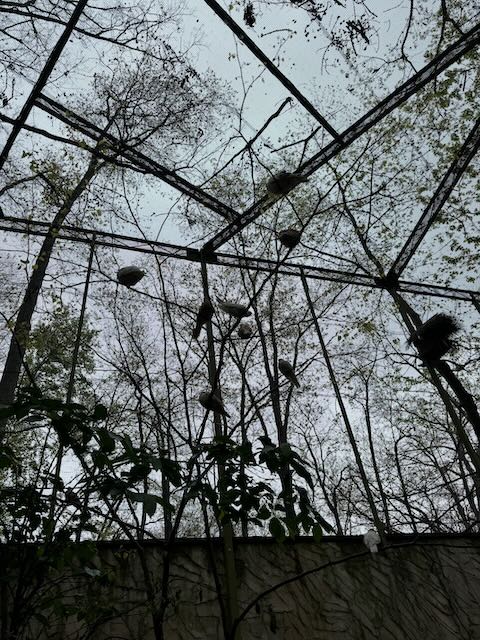

How did such a place come to exists in Tennessee? Well, Fletcher Hollingsworth, founder of Parrot Mountain had a dream that led him to Tennessee to build an exotic bird sanctuary. As a child, he rescued and rehabilitated injured birds. Eventually, he became interested in tropical birds and began collecting them to bring to a sanctuary in New Orleans. Now that he has developed Parrot Mountain, he has collected over 130 species of exotic birds, many of which have been brought there for rehabilitation or to escape abuse. Some were surrendered as unwanted pets by their owners, and many are considered endangered species. During warm months, the birds are kept outdoors, but in the colder months, they are housed inside to protect them from the elements.
As you wander the grounds of Parrot Mountain, evidence of the Hollingsworths family’s affection for these incredible birds is pervasive, as is their spirituality. The gardens provide spots for quiet reflection, gorgeous vistas of the surrounding mountains, and opportunities to be surrounded by these beautiful creatures. Every employee working at Parrot Mountain was friendly with outward affection and appreciation for the park’s inhabitants. They helped visitors learn more about the birds, why they were there, and the best way to interact with them.
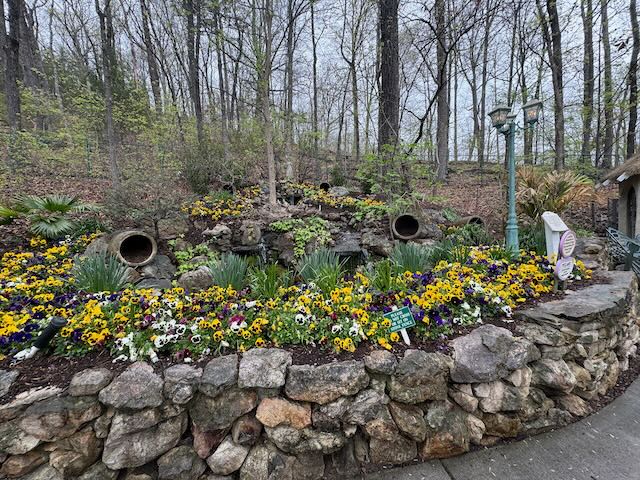
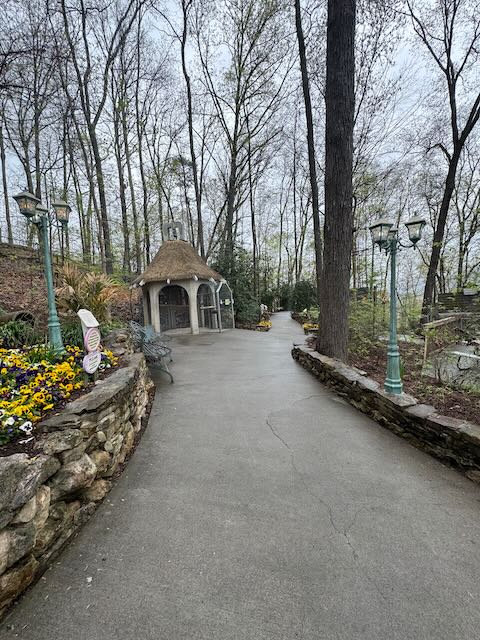
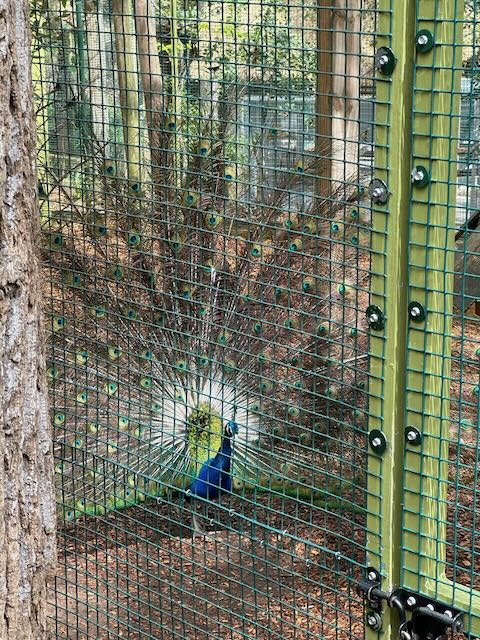
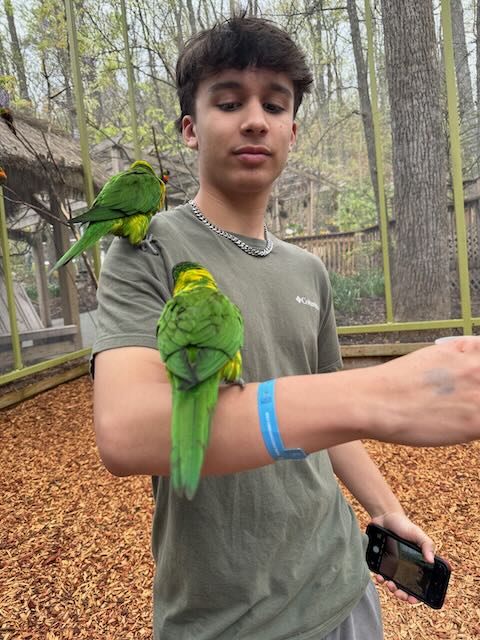
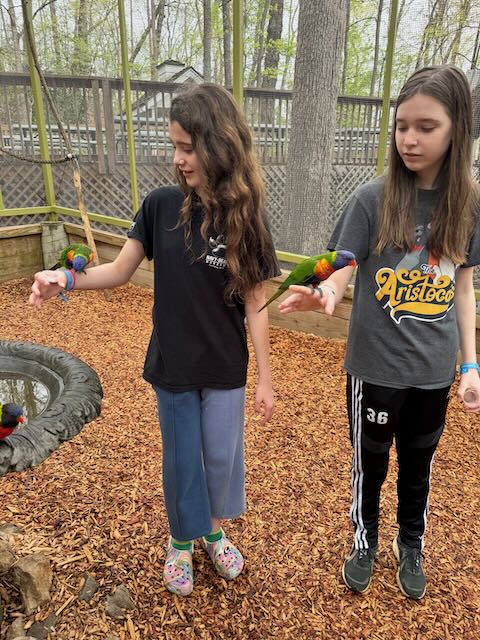
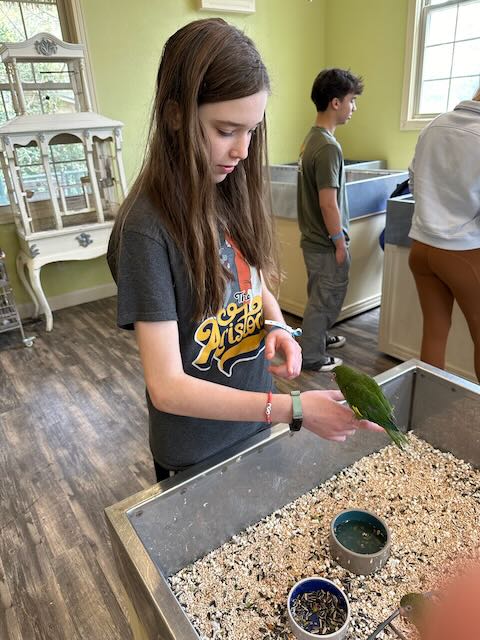
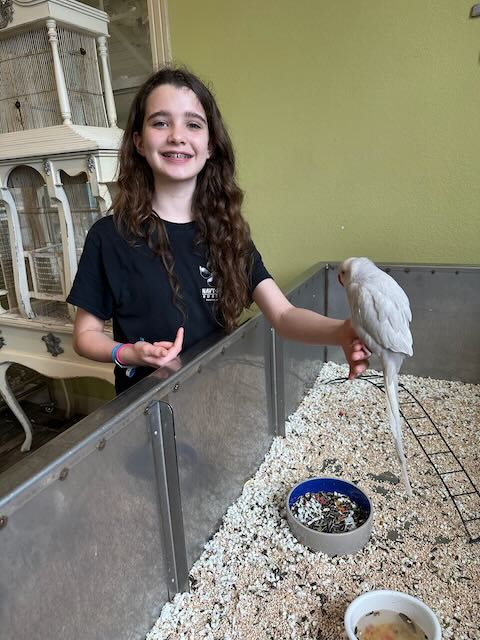
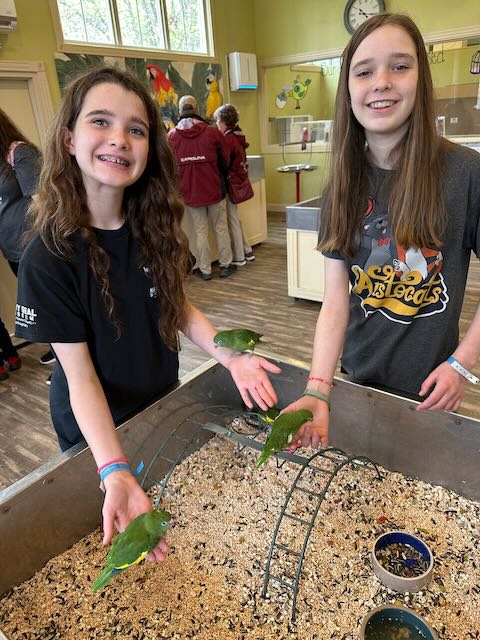
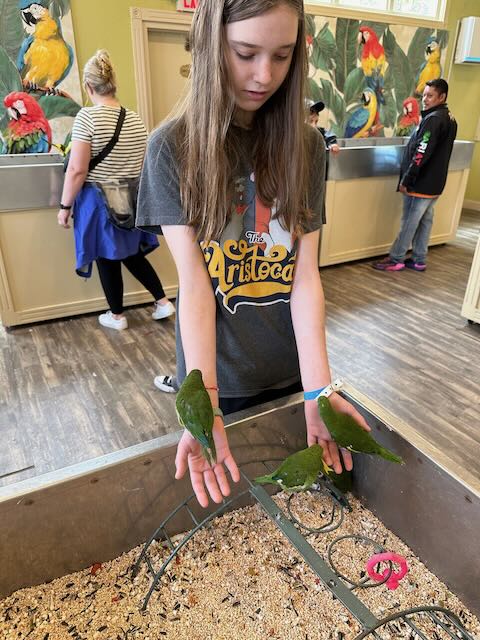
One of the draws to visiting Parrot Mountain was the opportunity to feed the birds. I never imagined that we would literally be covered in birds. In the feeding area, no photos were allowed, but there were dozens of birds, large, and small on perches, waiting to be hand fed sunflower seeds. Kai and I had some definitely hesitation in letting some of the larger birds eat out of our hands. (I have some trauma from living in Mexico where we had a macaw in our home and it was aggressive. Paco bit me on more than one occasion and those beaks are no joke!). It turns out that the large birds are gentle and they use their tongues to maneuver the sunflower seed so that their strong beak can crack it open and eat the meat from the seed. Then, they spit out the shell – it’s remarkable! Some birds hopped right on our fingers or shoulders. They are funny, with distinct personalities and incredibly verbal! Marlie even taught on to say her name!
We were also able to interact with birds as we fed the lories small cups of nectar in their protected enclosure and also in the nursery where young birds are raised and cared for by Parrot Mountain staff. I think we could have left Alyssa there all day and returned for her at dusk. Both she and Marlie have a special connection with animals. The more Kai is around them, the more he relaxes and learns to enjoy being around animals too.
If you happen to find yourself in Pigeon Forge, I cannot recommend Parrot Mountain highly enough.

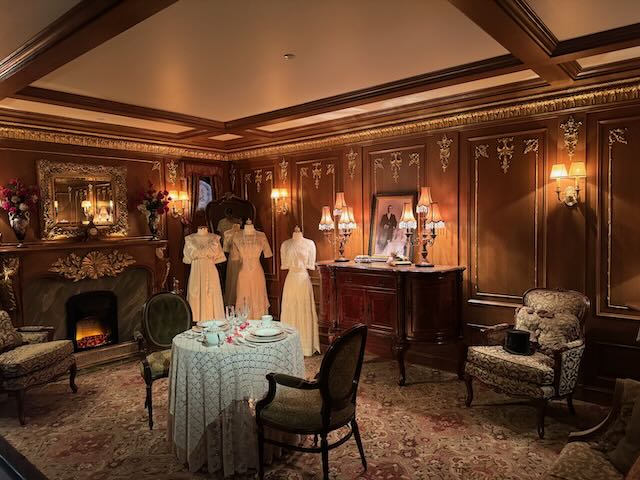
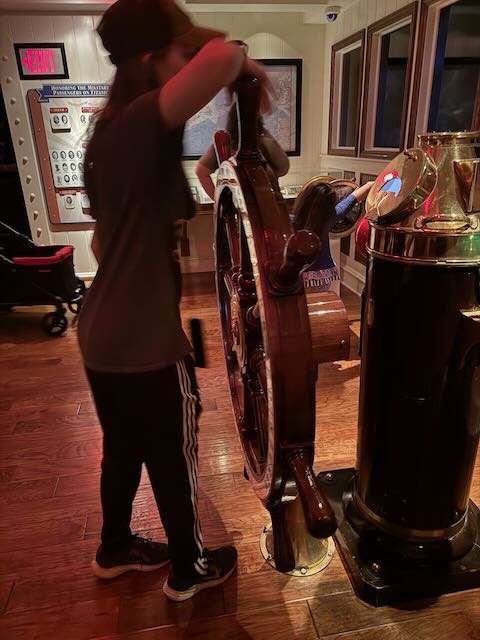
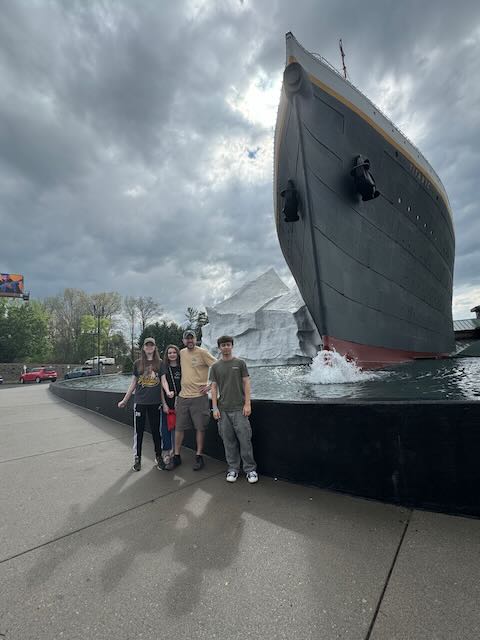
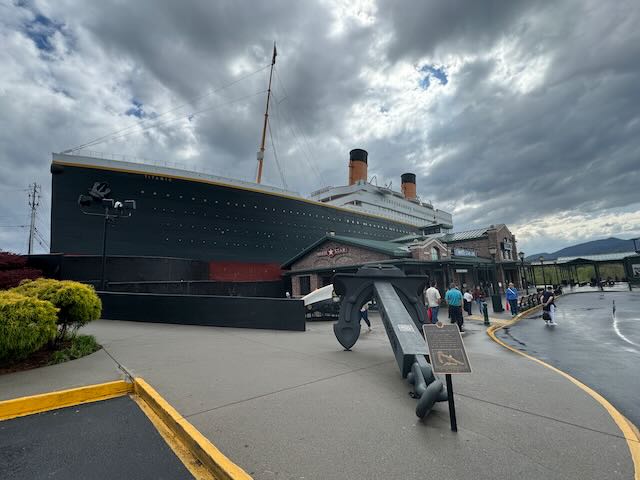
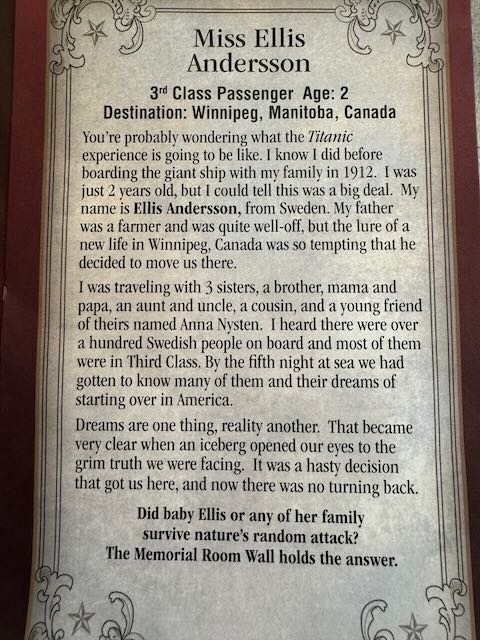
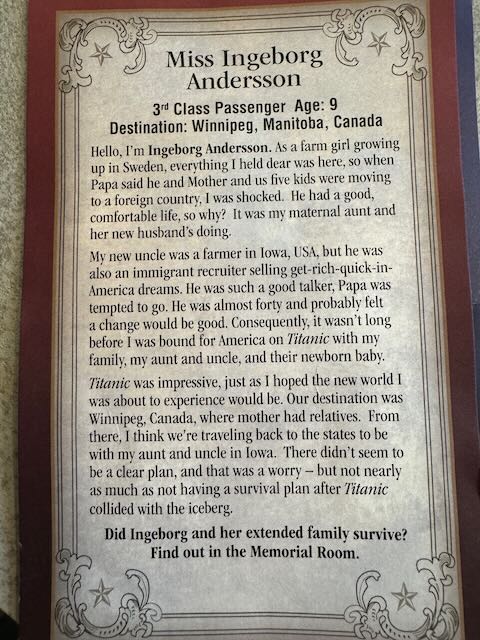
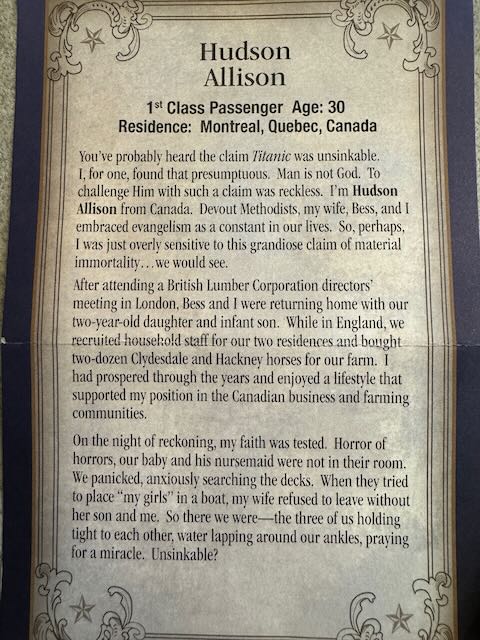
From birds to boats, we headed over to Pigeon Forge’s Titanic Museum. I, too, had my doubts about a Titanic Museum in the middle of Tennessee, a place with no obvious connection to the Titanic. However, if you are a Titanic enthusiast, this place a must-see. The museum is in the shape of the ship (a 1/2 size replica), complete with iceberg. It’s very impressive from the outside! However, it is definitely a missed opportunity for the museum that you cannot stand on the bow with your arms outstretched like Kate and Leo. When we arrived, we were given cards with short biographies of actual passengers who were aboard the ship and at the end of the exhibit, we could discover their fate by finding their names on the memorial wall. Four of us were from the same family, the Anderssons, from Sweden), third class passengers. I was assigned the mother and Rob, Marlie, and Alyssa were my children. Kai was a first-class passenger, a man named Hudson Allison. As we navigated the museum, we listened to an audio-tour with narration from actual survivors and their families. Artifacts from the ship and replicas of key features such as a lifeboats, first and third class accommodations, and the Grand Staircase provide an immersive experience. Museum workers dress in period clothing and answer any questions about the ship or its passengers.
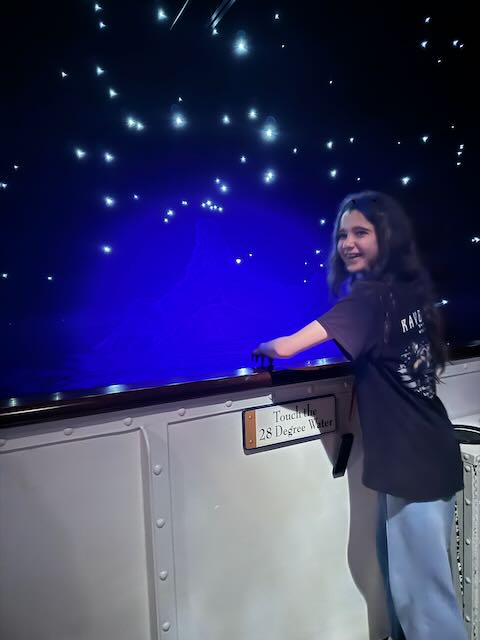
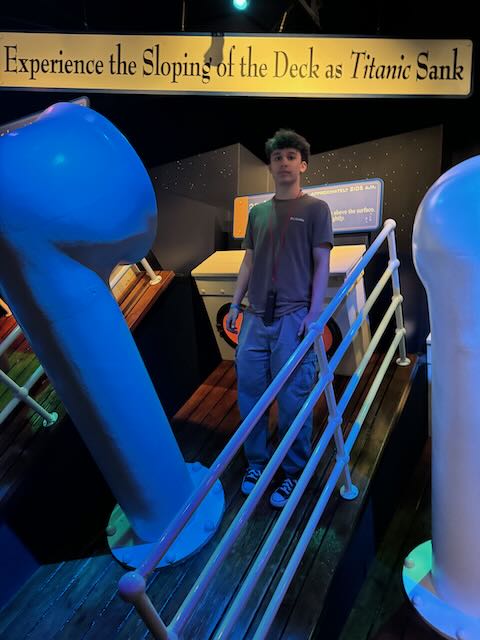
Looking at pictures of passengers boarding the ship with their belongings, excitement in their eyes, the opulence of the ship captured in eerie black and white gave me goosebumps. Dishes, jewelry, a deck chair, a trunk and other artifacts brought up from the wreckage are ghostly reminders of the tragedy that occurred. You can hop on the sloping decks to experience how it might have felt as the ship descended, touch water at 28 degrees, the temperature of the North Atlantic the night the ship hit the iceberg and use the telegraph to send a distress signal.
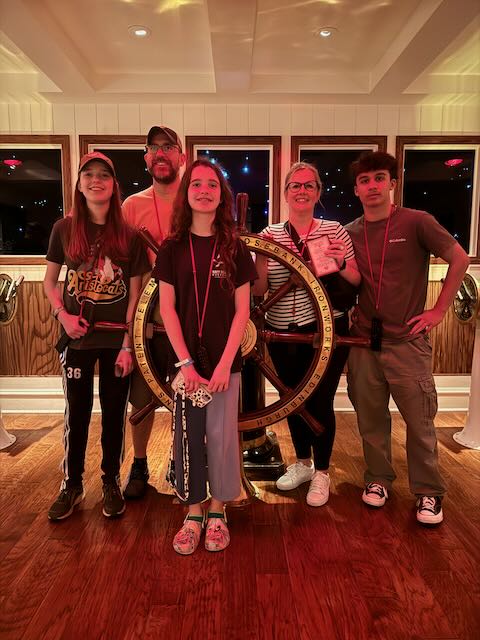
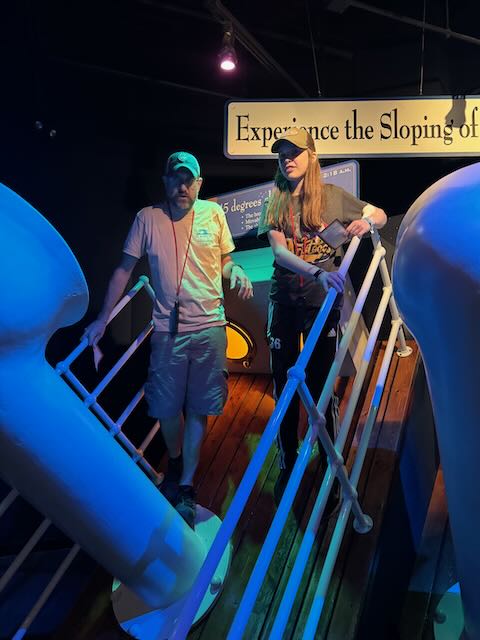
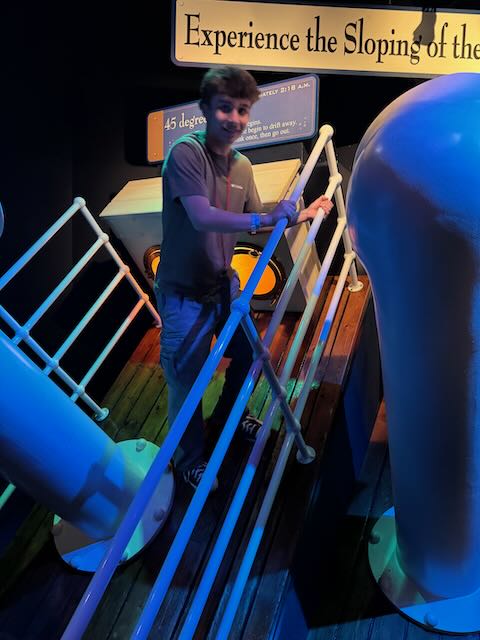


As you move through the exhibit, which is staged like a timeline of events in the ship’s history, the intensity builds. I can hardly imagine the panic and fear that ensued on the night of April 14th, 1912 and often wonder how survivors dealt with the aftermath. Of the 135 children on board (ages 15 and under), over 50% were lost. First class passengers had a survival rate of 62%, while third class passengers had a survival rate of only 25%. We found our passenger’s names on the memorial wall at the end of the tour. Each one of them perished aboard Titanic. Having the name of a passenger assigned during your visit personalizes the experience. You root for this individual’s survival. I felt a little gut-punch on finding out Mrs. Alfrida Andersson’s fate.
Here are our bios and a photo of the actual family:




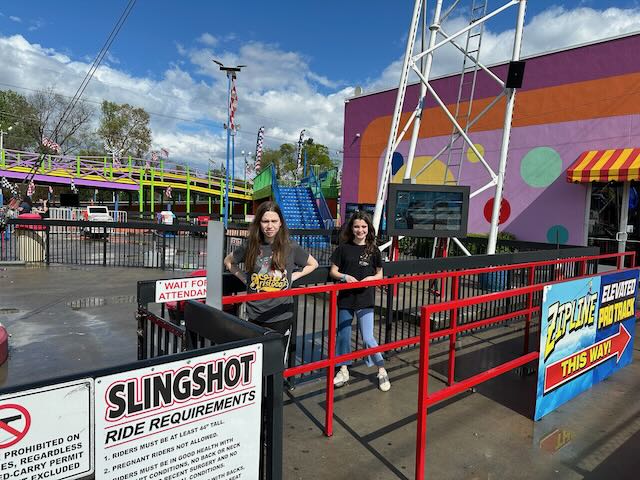
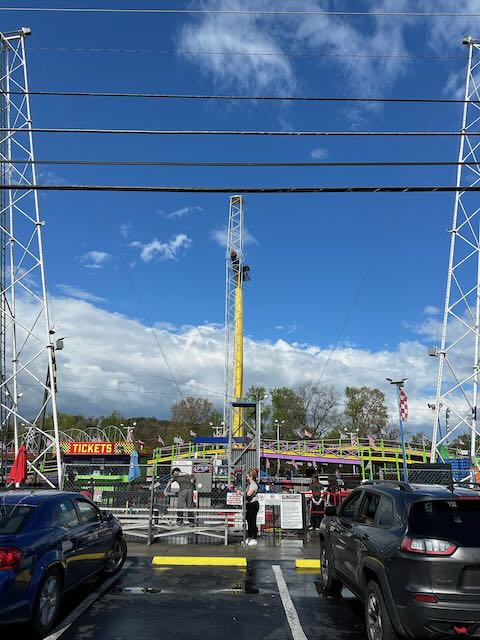
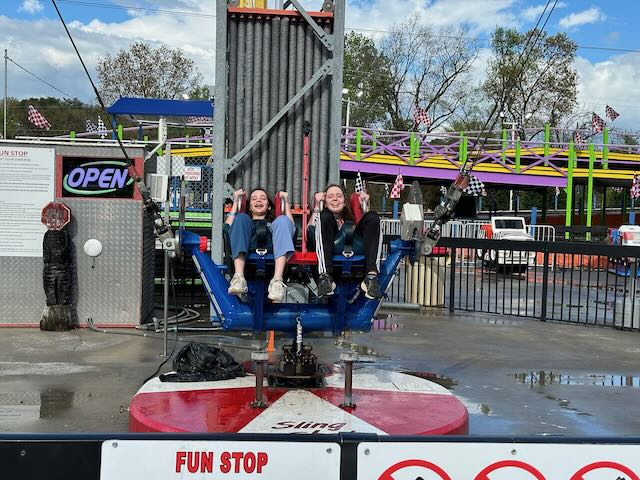
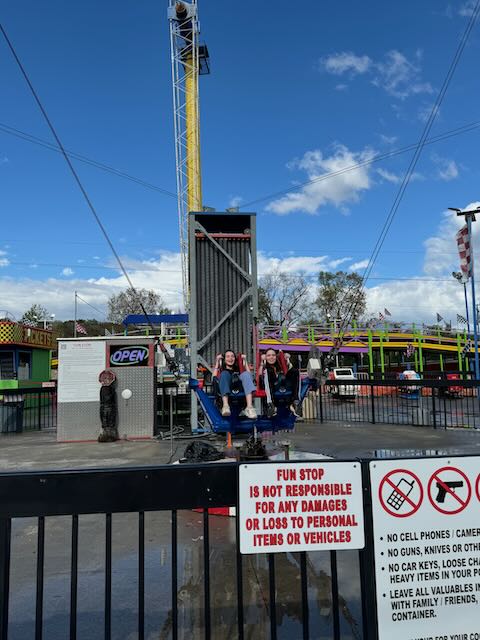
So much excitement and so little time! After a quick stop at the Fun Zone, where Marlie and Alyssa rode the giant spring swing, we had an early night with breakfast for dinner and another episode of Physical 100. Tomorrow we pack up early and head to Middletown, VA and another Harvest Host site.

Pigeon Forge, it’s been a blast!
 Wandering, But Not Lost