One of my favorite traditions on a road trip is to sneak off early in the morning with Rob before everyone else in the camper wakes up and try a local coffee shop. Well, we have been sleeping in a bit more than usual, which shouldn’t be surprising since we’ve been staying up a bit up later than usual. It’s really hard to go to bed when it doesn’t get dark until 10:30 PM!
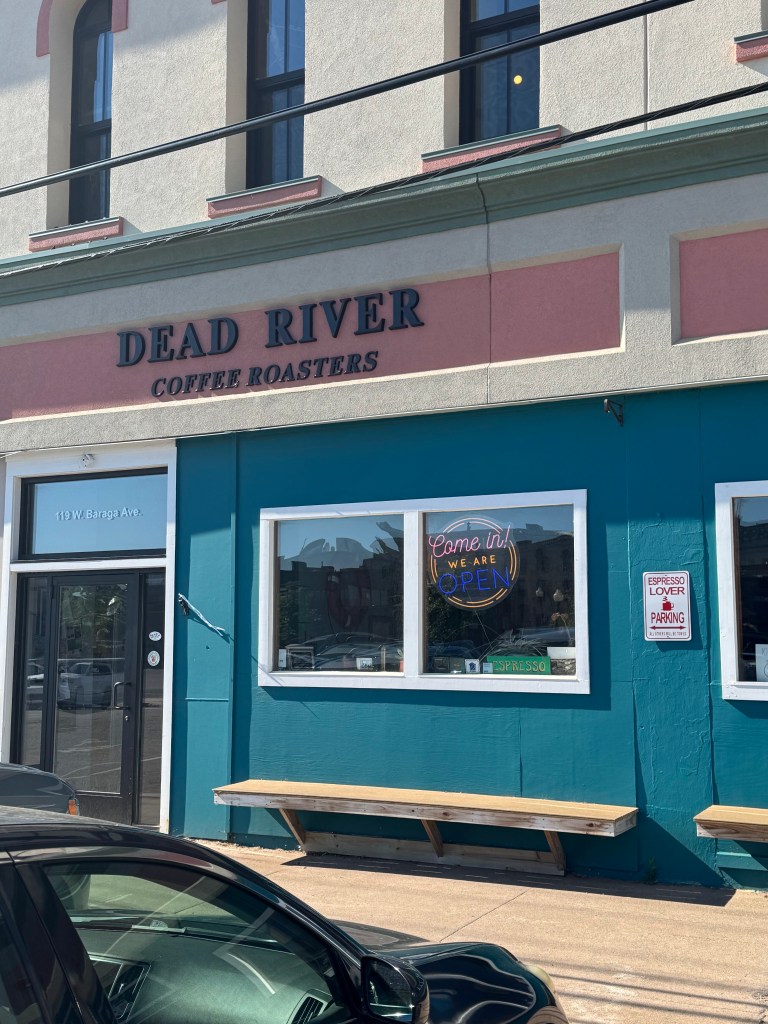
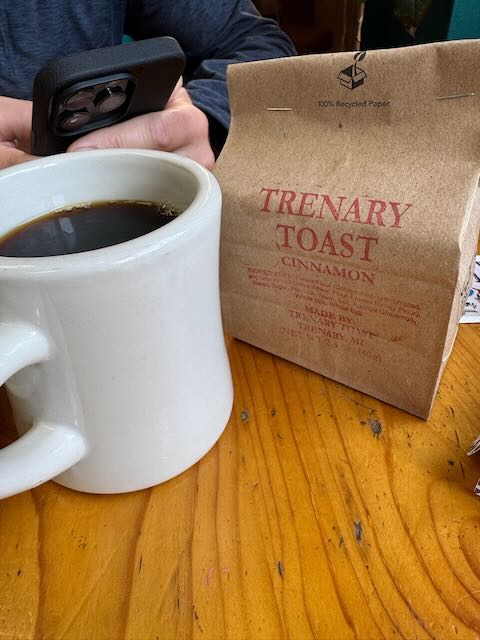
Rob and I slipped out of the camper and jumped in the Mini with the sunroof open and headed into Marquette, the UP’s largest city and home to Northern Michigan University. It’s absolutely charming with its artsy vibe and beautiful old buildings. We found ourselves at Dead River Coffee Company where we sampled the local brew and shared a piece of homemade coffee cake and Trenary Toast. Trenary Toast is a UP tradition. It is a twice-baked sweet bread coated in cinnamon and sugar that has a long shelf-life. You should not eat Trenary Toast dry. It’s meant to soak in milk or coffee – yum! The texture very dry and crumbly, making it distinct from a biscotti.
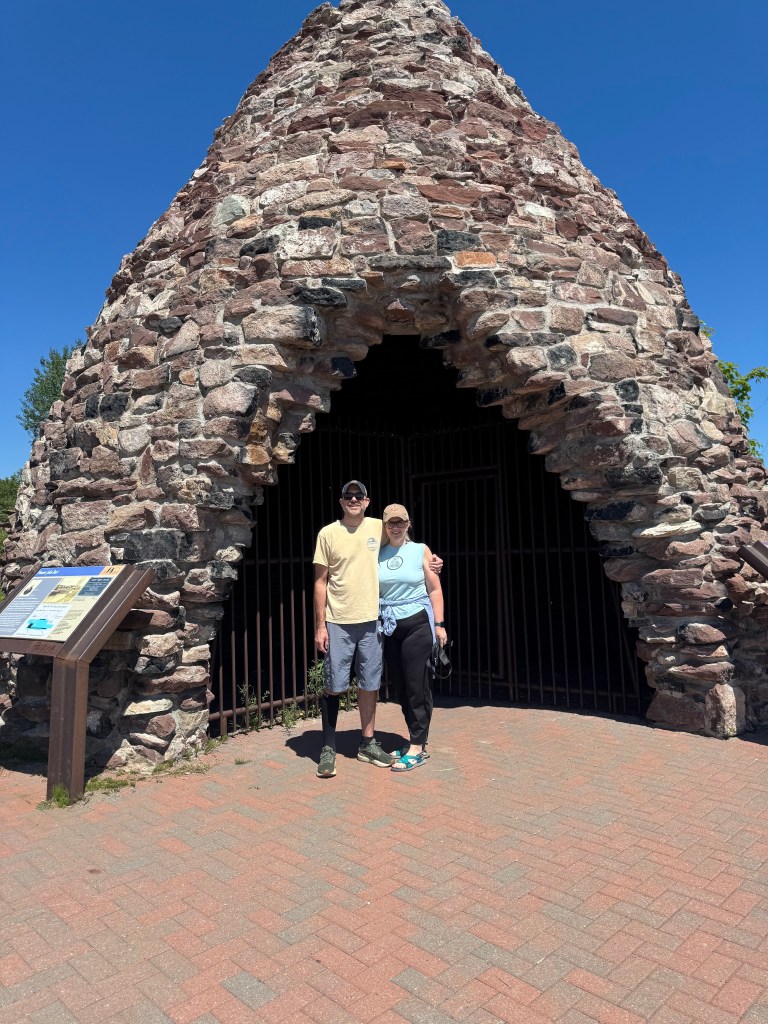
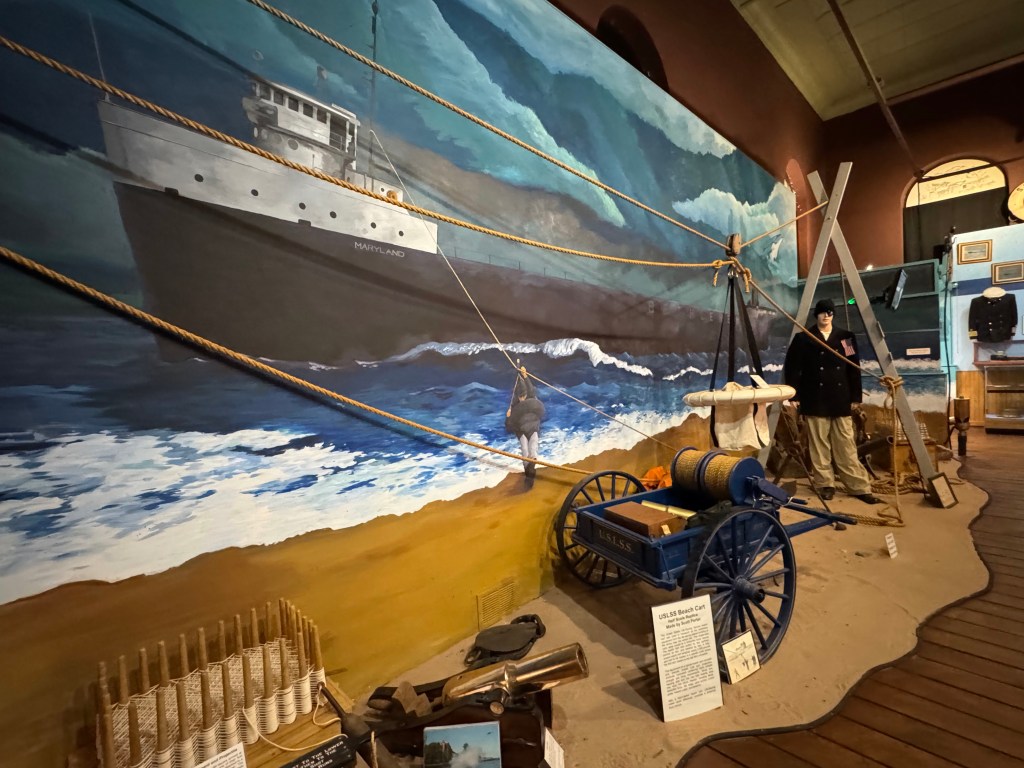
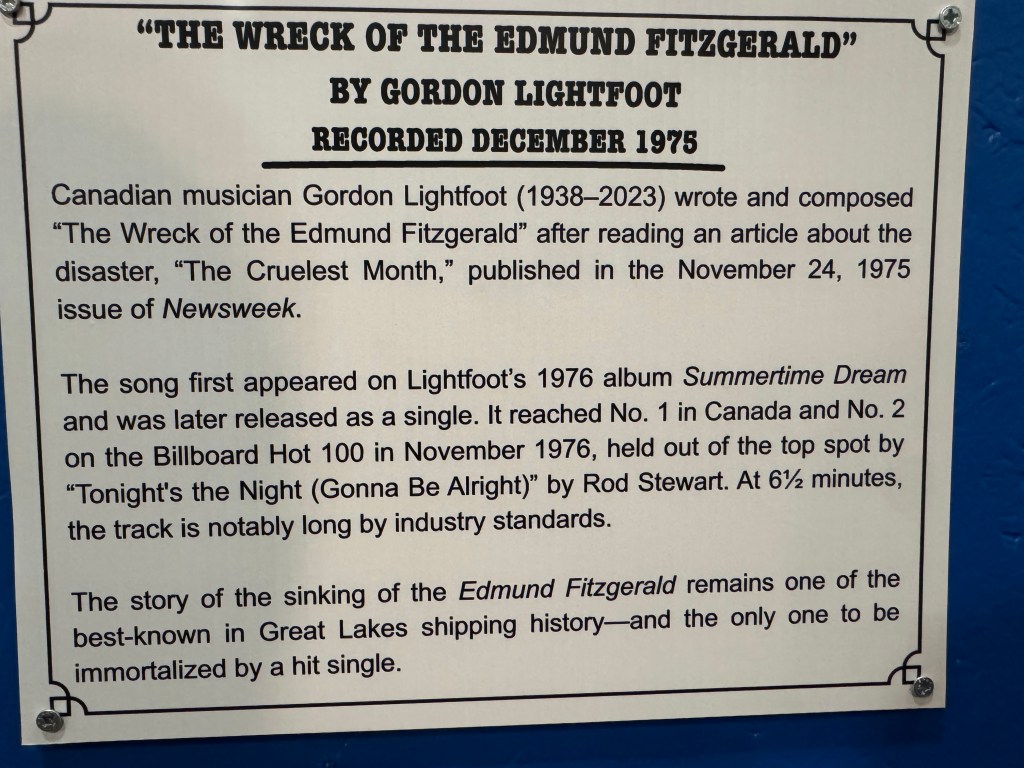
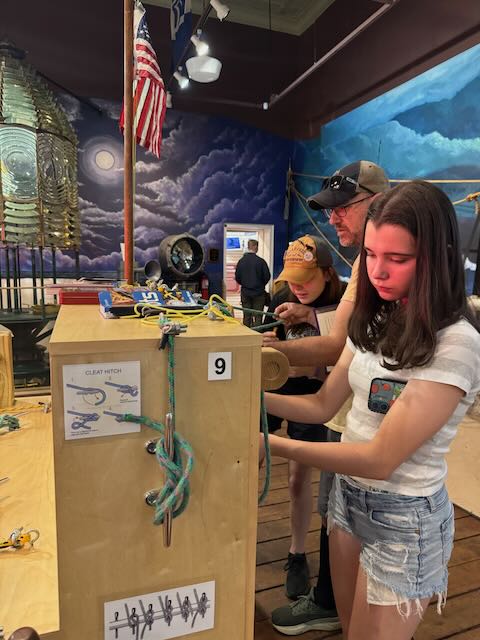
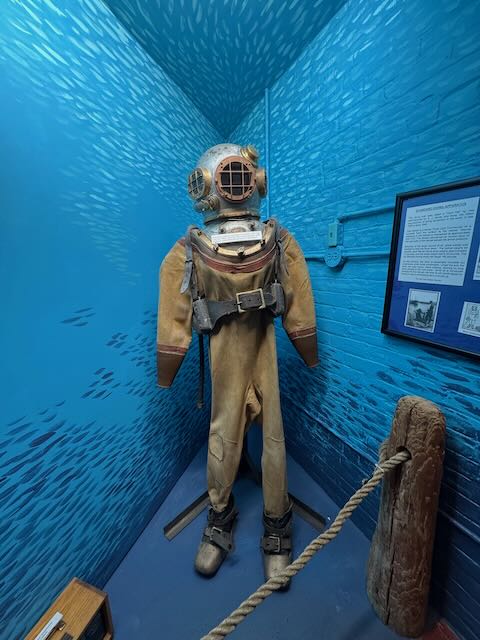
Determined to find a lighthouse to climb, we scooped up the kids at the camper and after a quick side quest to visit a beehive iron furnace (or kiln) on one of the scenic pull-offs next to the lake, headed back into Marquette to the Maritime Museum and Marquette Harbor Lighthouse. Fresh off our visit to the Shipwreck Museum, we hoped for a self-guided tour and a quick trip up to the top of the lighthouse before venturing out to explore more of Marquette. It turns out, they don’t let you walk around a functioning lighthouse alone, which is probably very wide because people just aren’t careful. That said, we agreed to a guided tour. After learning all about trying knots and the United Life-Saving Service as well as some more Great Lakes shipwrecks (and also more about the Edmund Fitzgerald – cue the song), we headed to the front of the museum to meet our tour guide.
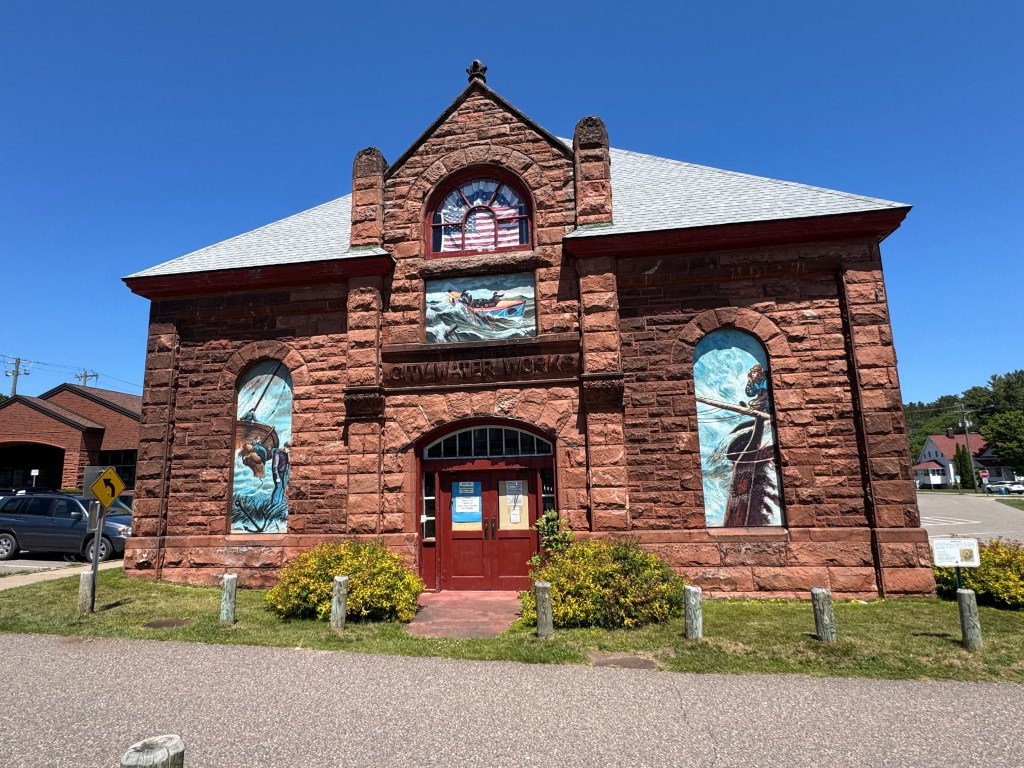
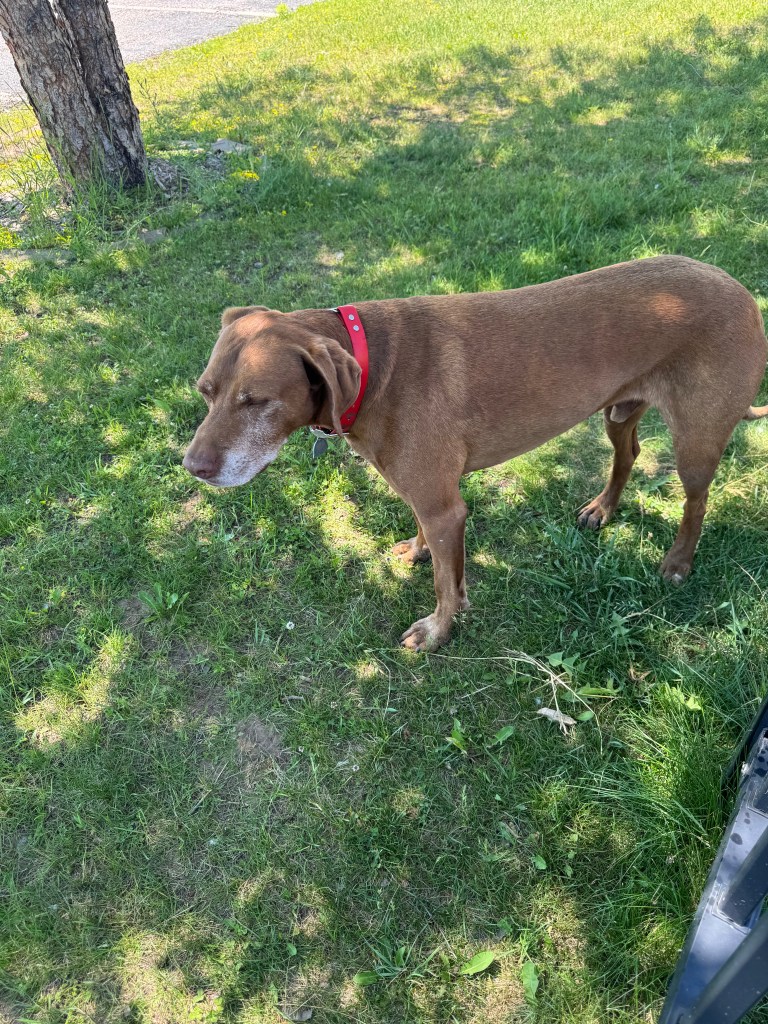
Roy is a volunteer docent at the Marquette Maritime Museum. He is a native of the area and is deeply knowledgeable about maritime culture, lighthouse keeping, and everything Marquette. He started the tour by talking about the museum building, which used to be the city’s pumphouse until 1982. The red stone is sandstone and the upper parts of the building have some sandstone with white striations – this is called “bacon” sandstone. He also showed us the Coast Guard station responsible for this area of the Great Lakes. The station has two resident dogs with petty officer status: Thor and Loki.
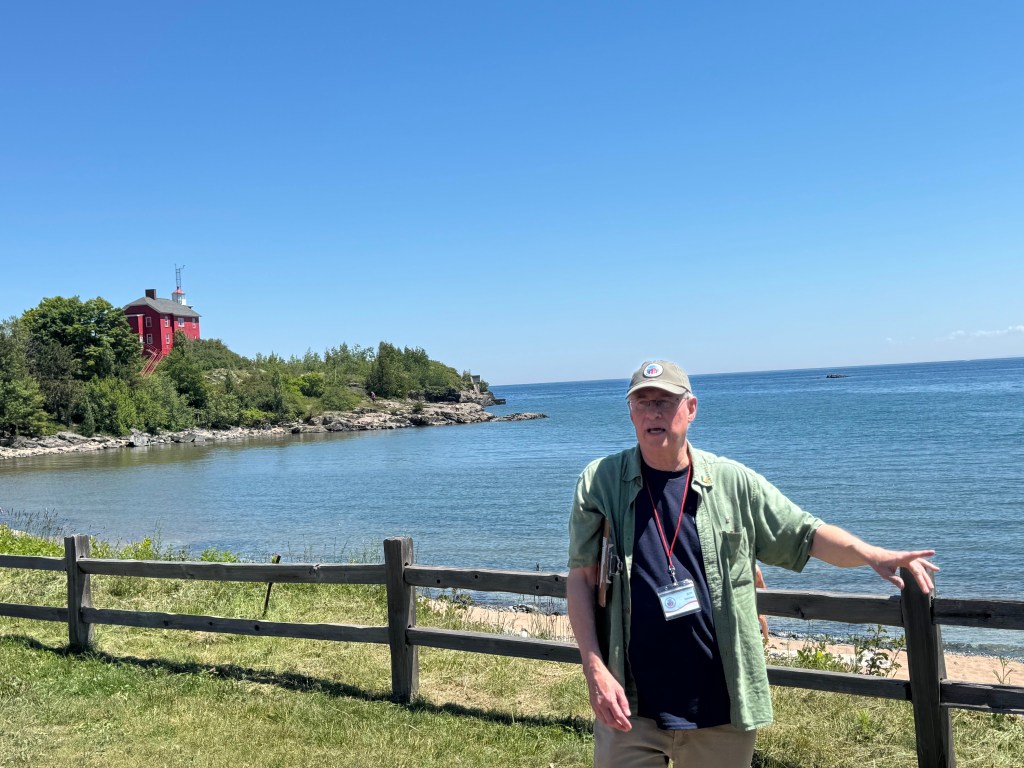
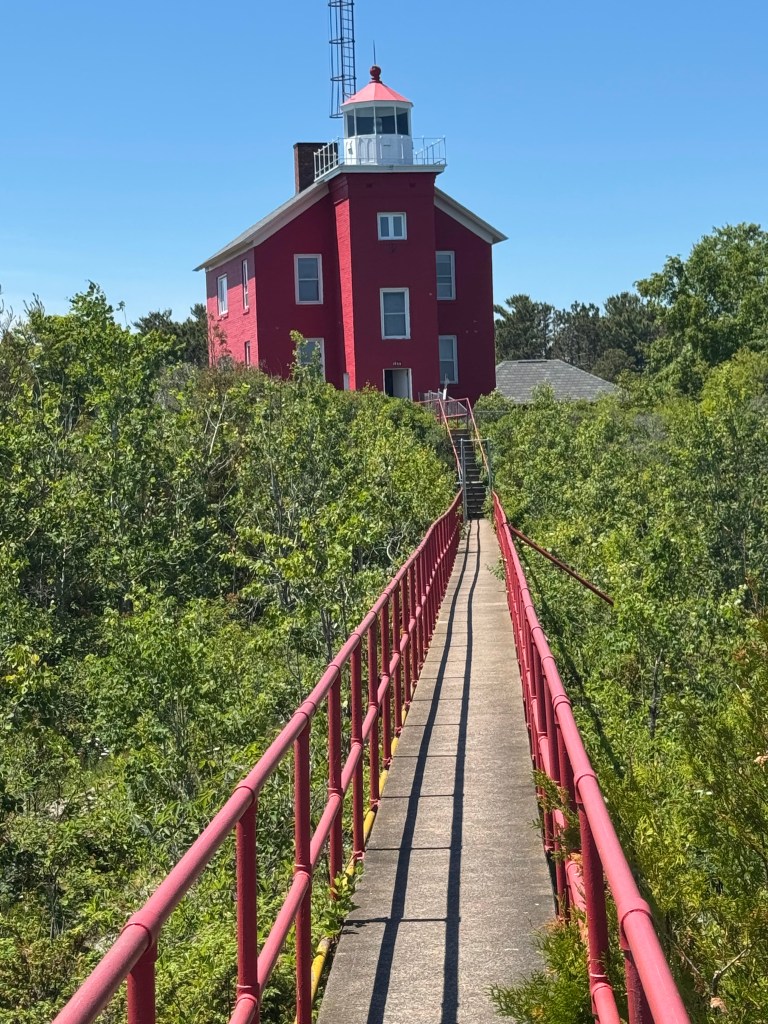
As we moved across the grounds, Roy shared story after story about lighthouse keepers, Life-Savers, Captains, and wove in a few ghost stories here and there. The lighthouse stands less than a quarter-mile from the museum. After 50-minutes, we still hadn’t made it there.
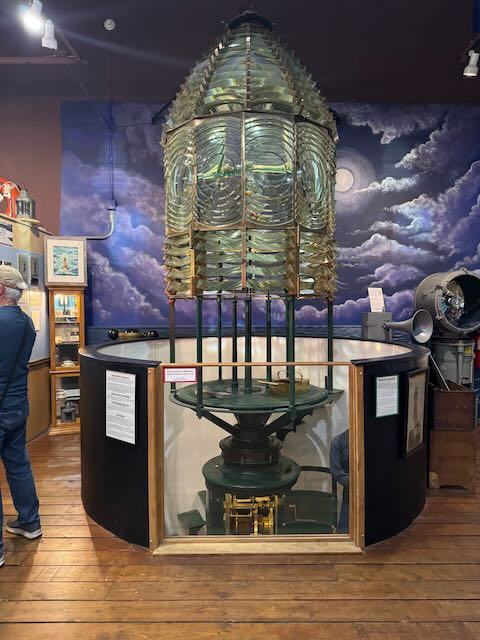
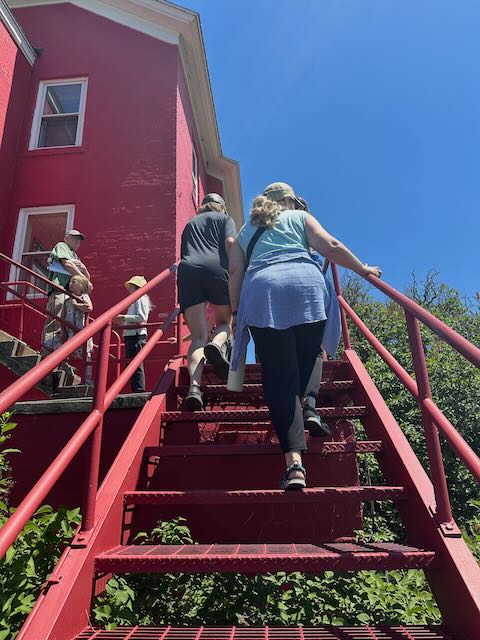
When we finally reached the 45-steps up to the lighthouse, Roy guided us through the building, pointing out various maps, photos, and artifacts from the days when a lightkeeper resided in the lighthouse with his family. Now, lighthouses are modernized and monitored remotely. Lighthouses like the Marquette Harbor Lighthouse still play an important role in maritime navigation. They serve as a backup to modern navigation systems as well as to recreational boaters, signaling shallow waters, rocky coasts, and guide ships into harbors. Each lighthouse has its own unique light pattern called a characteristic, which helps navigation at night. A rotating fresnel lens and a 1,000-watt or LED bulb make these unique characteristics.
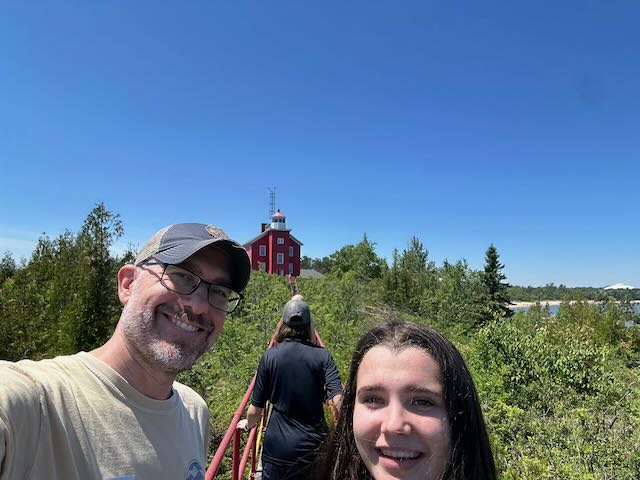
By the time we thanked Roy for his valuable information and left the lighthouse, we were all famished. We headed to the Lakeshore Grill, a food truck parked outside Drifa Brewing Company where we scarfed down smashburgers, fries, homemade rootbeer and frozen lemonades. This was a great way to break-up the day, eating al-fresco and enjoying the sunshine.
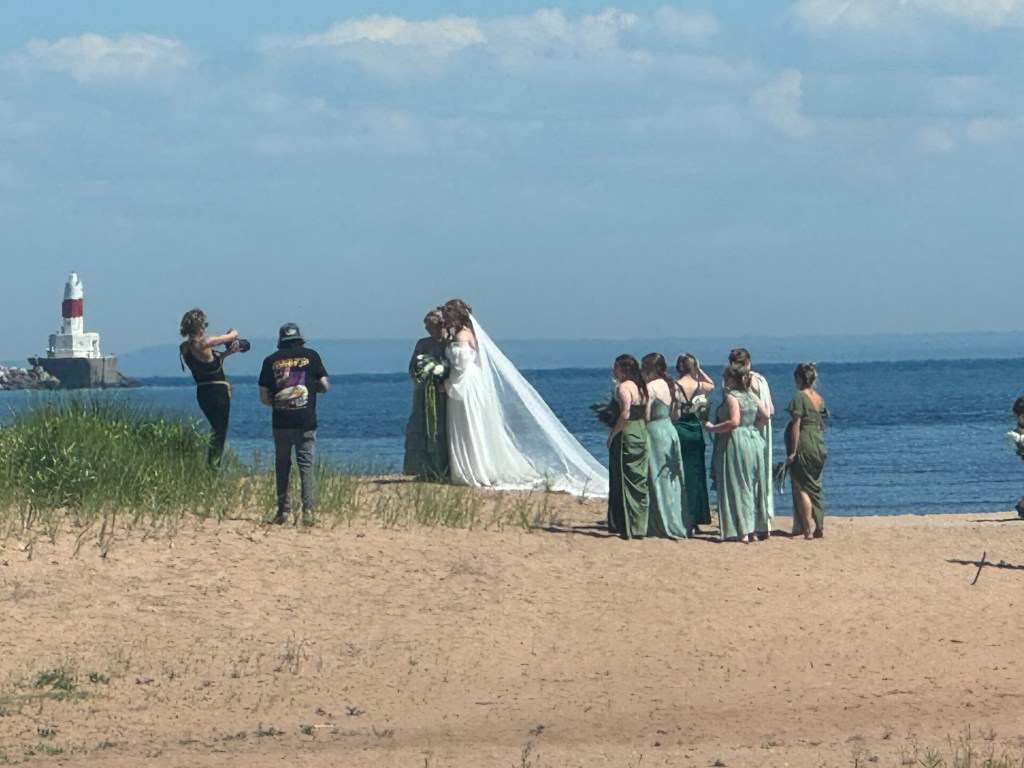
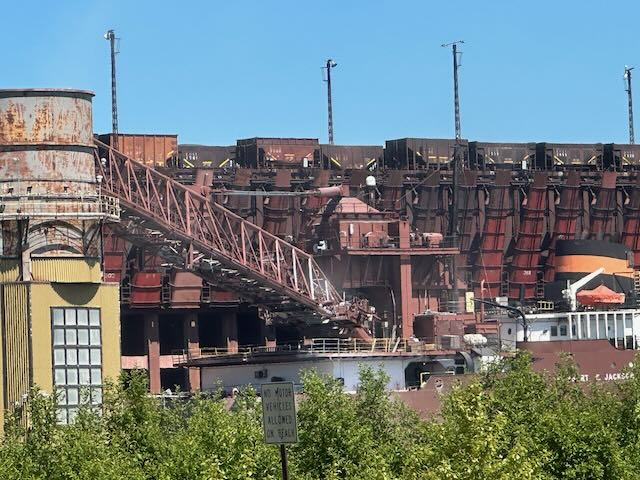
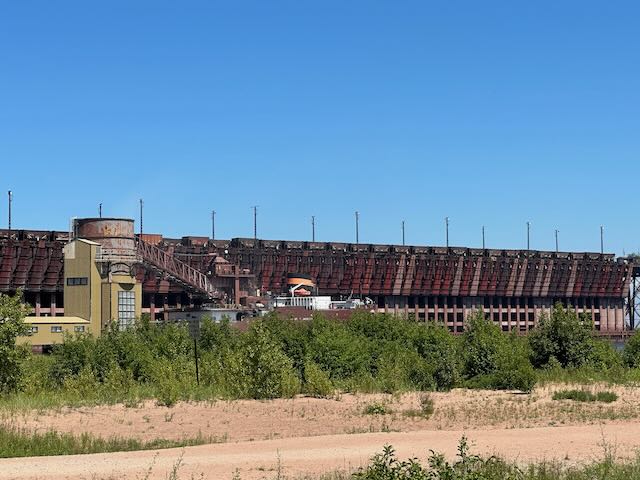
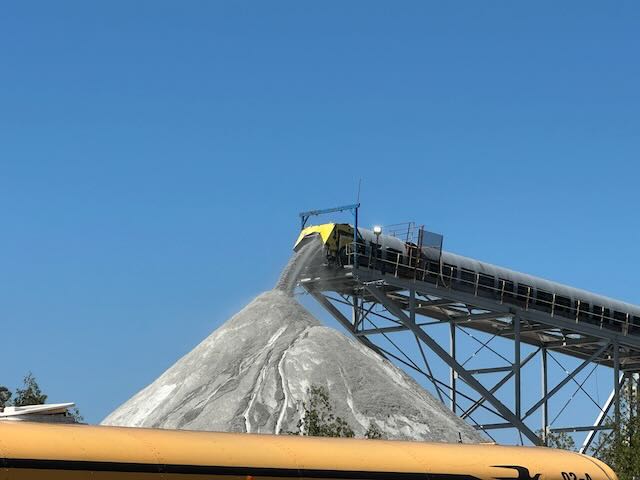
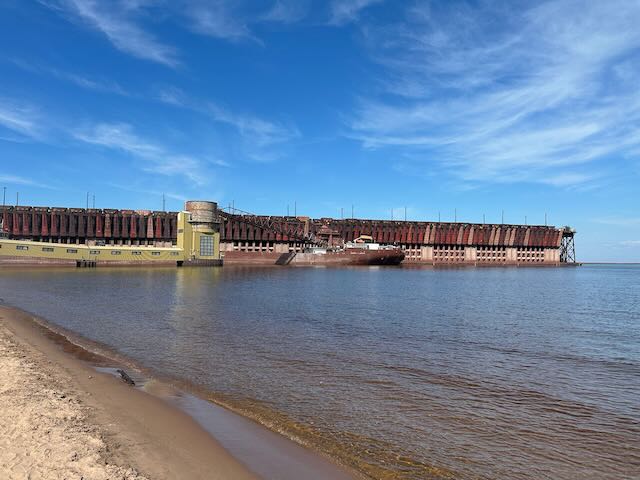
Most of our trips also include a little bit of adventure and this one is no exception! We made our way to Presque Island Park, without a doubt, the busiest place we have visited in the UP. We passed not fewer than three weddings, with the wedding party and guests taking photos in front of the breathtaking lake views. Scores of people with buckets and shovels scoured the beaches for Yooperlites – special rocks that wash ashore in the Great Lakes region and are rich in fluorescent sodalite that glows orange, yellow or pink under UV light. A fair number of people also pulled off the road at an ore dock to watch it load its cargo of taconite pellets (iron ore) onto the Herbert C. Jackson (sister ship to, you guess it, the Edmund Fitzgerald). This is the first time I have ever seen an ore dock. This is how it works: Railcars filled with goods move down the dock (1,000-2,000 feet) and fill storage bins on the dock. Moveable steel chutes are used to empty the storage bins into the freighter. Nearly this entire process is done using gravity, except for the heavy machinery that positions the chutes. You might think that the loading of a freighter with iron ore pellets would not be mesmerizing, but it can be. In fact, Rob had us stop twice.
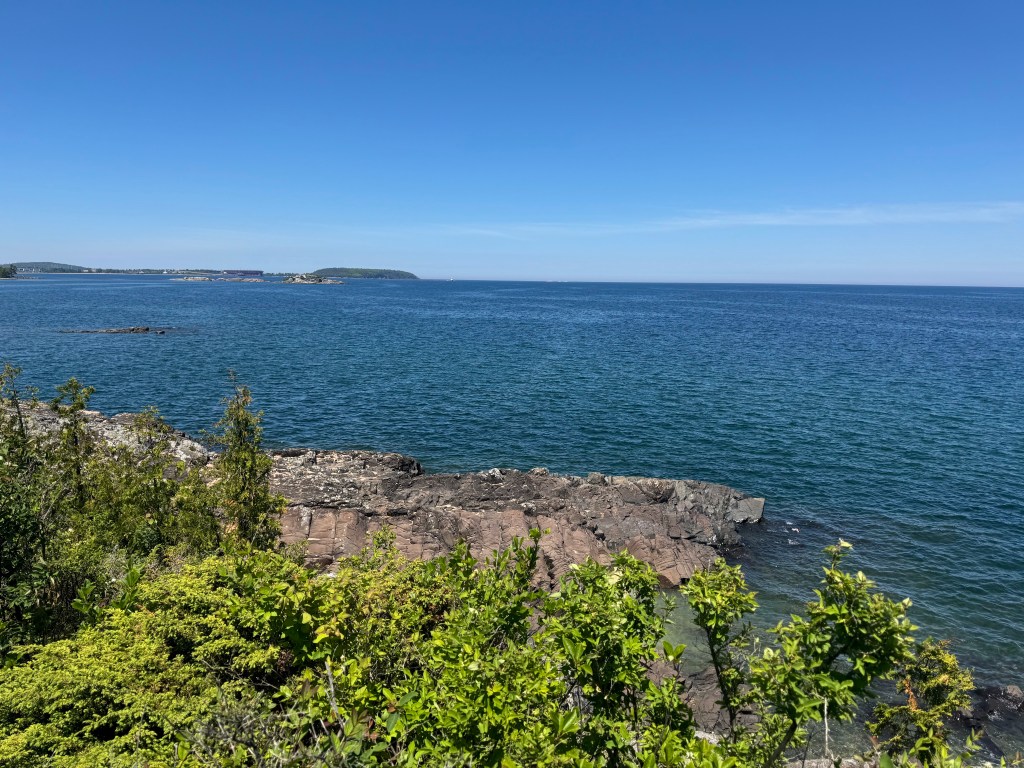
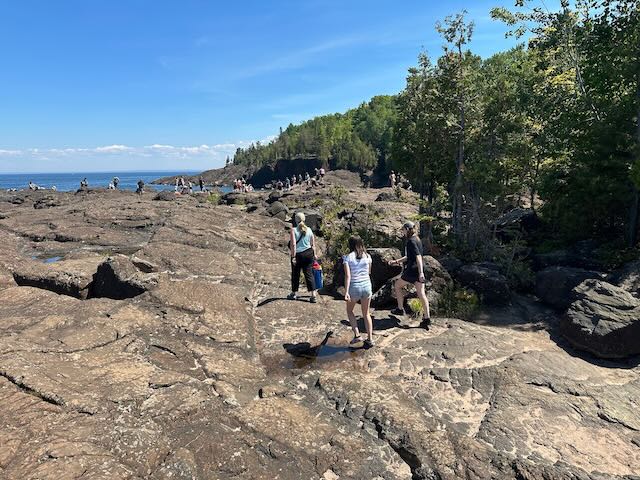
We parked the Mini at one of the beaches on Presque Isle and made our way out to the Black Rocks. I had it in my head that I wanted to jump off the rocks into Lake Superior, as many people do. All of us dressed with our bathing suits under our clothes and I packed some towels. As we made our way across the rocks, we saw a few dozen people at the edge of the rocks with more clapping and cheering down below. We watched several people take the plunge and then prepared ourselves for jumping. Rob volunteered as photographer after watching a few people jump. He wasn’t sure how he would enter the water and decided against risking re-injury to his ankle – solid decision, in my opinion.
Marlie and Alyssa went first, taking good, strong leaps off the ledge. When it was my turn, I took a deep breath, rocked a few times and jumped out before I could overthink it. The fall felt fast and before I knew it, I was under the water. – 54 degree water, to be exact. As soon as I surfaced, I swam through the crystal-clear lake to the edge of the rocks and climbed out onto land. Alyssa and Marlie opted to jump again, but I felt satisfied with my one good jump and watched from atop the rocks.
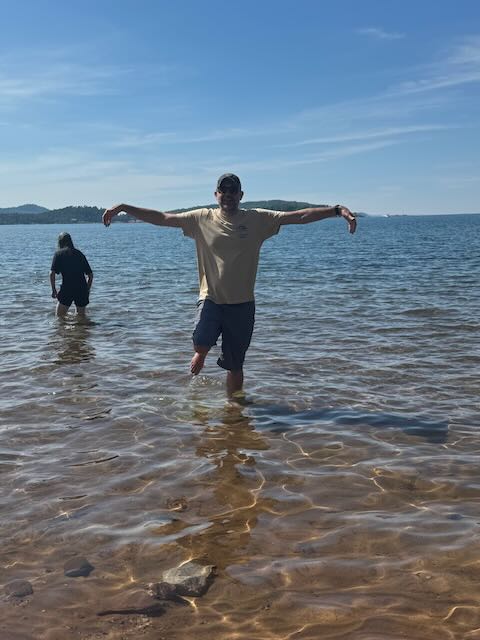
Before leaving the Presque Isle Park area, Rob wanted to cool his leg – it gets overheated in the compression sock – in Lake Superior. We found a sandy beach and walked down the water’s edge where he could wade into the cool water. I happily sat in the sun on a rock and read my book while the girls looked for Yooperlites, digging through the sand.
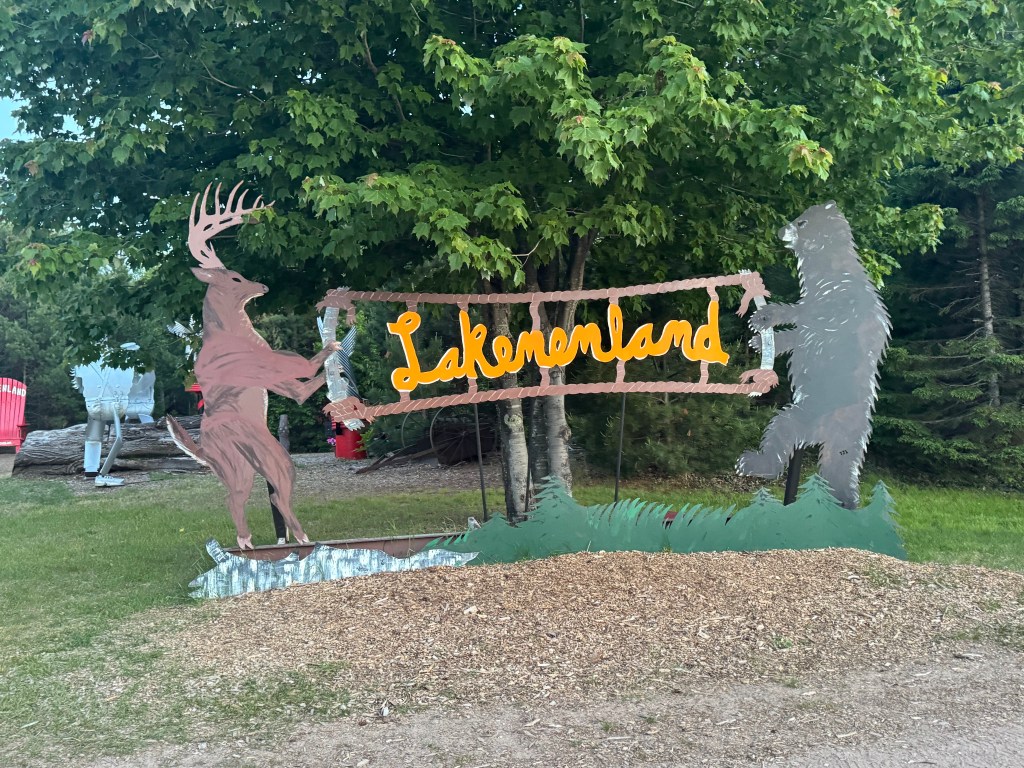
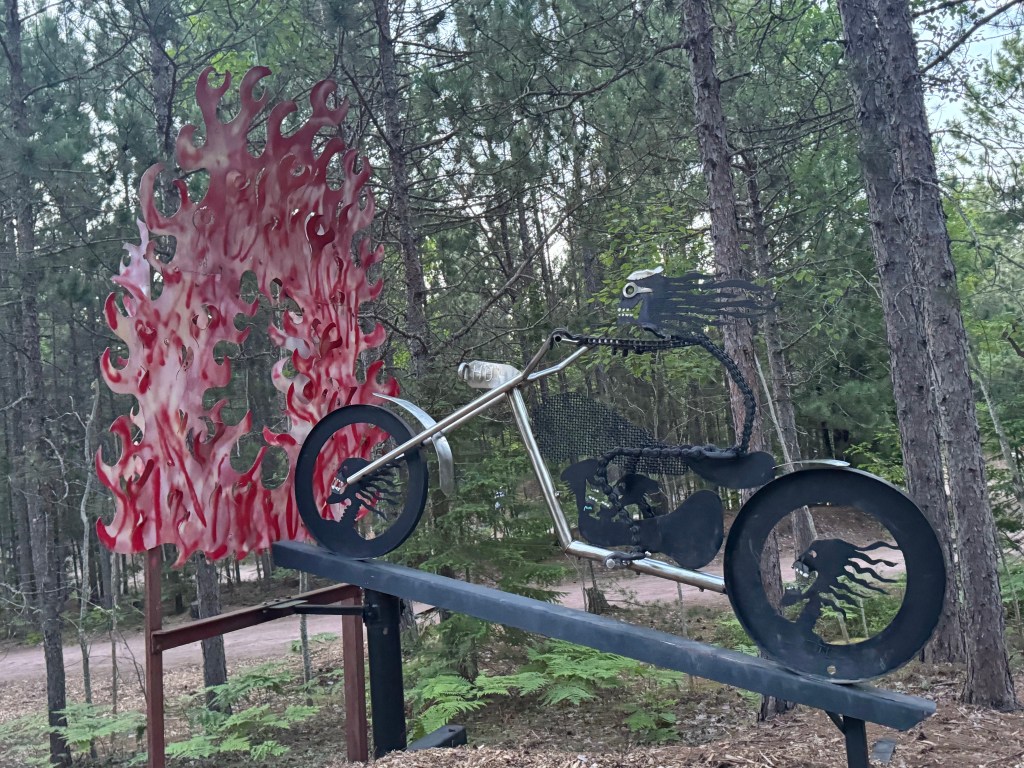
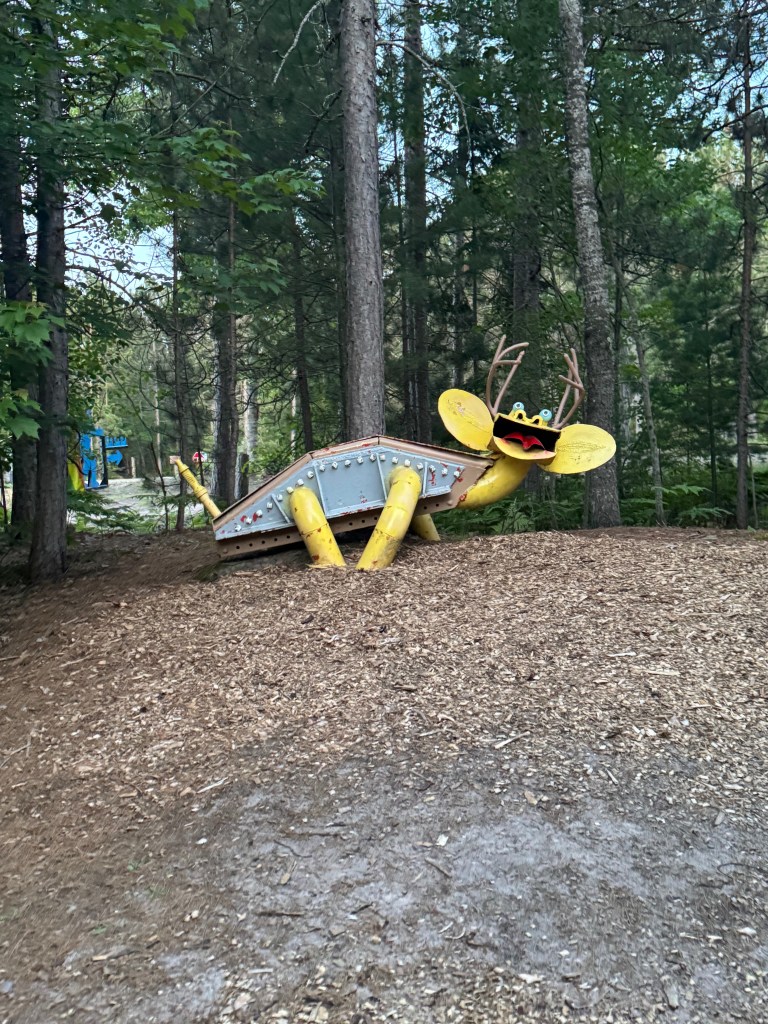
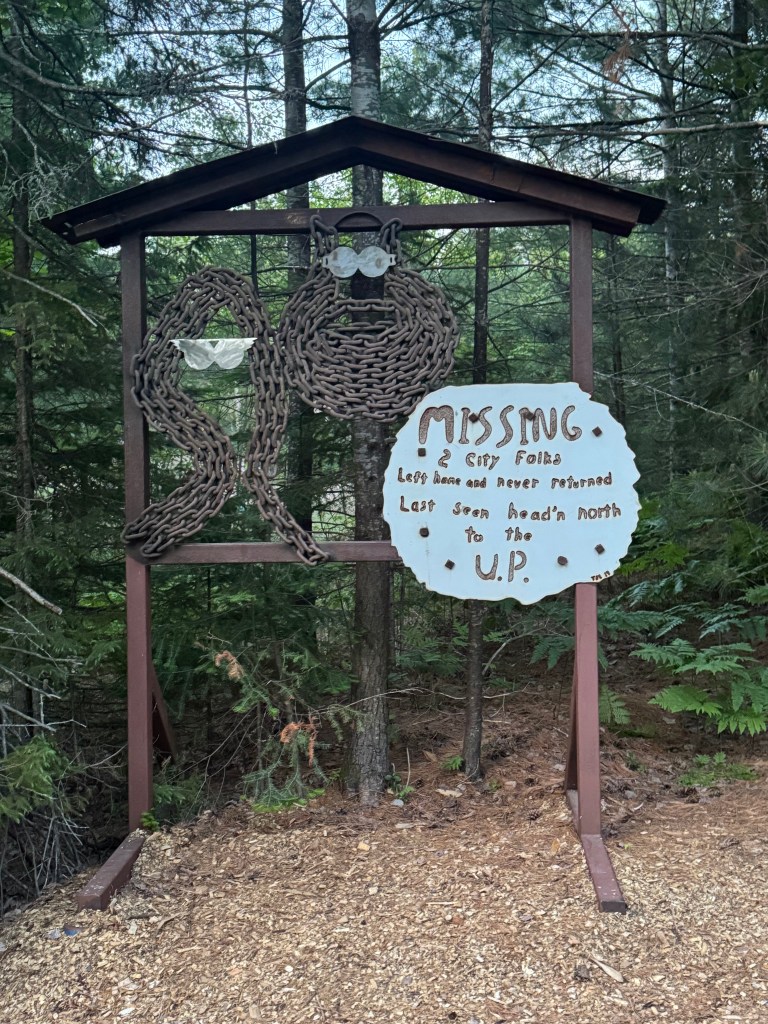
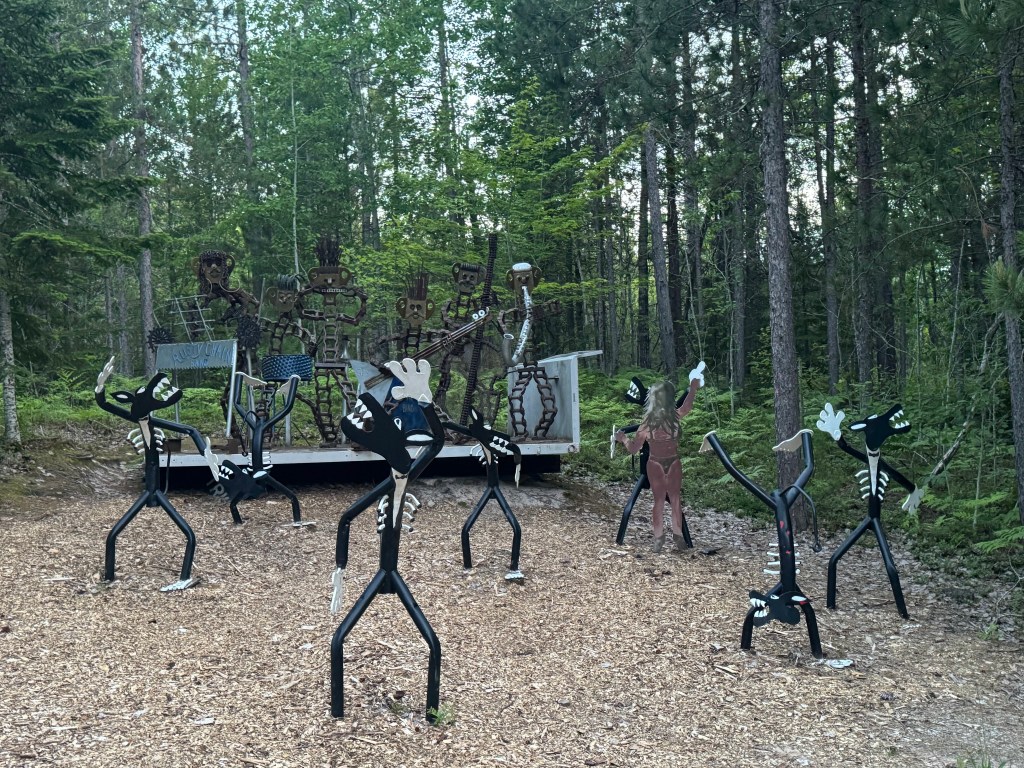
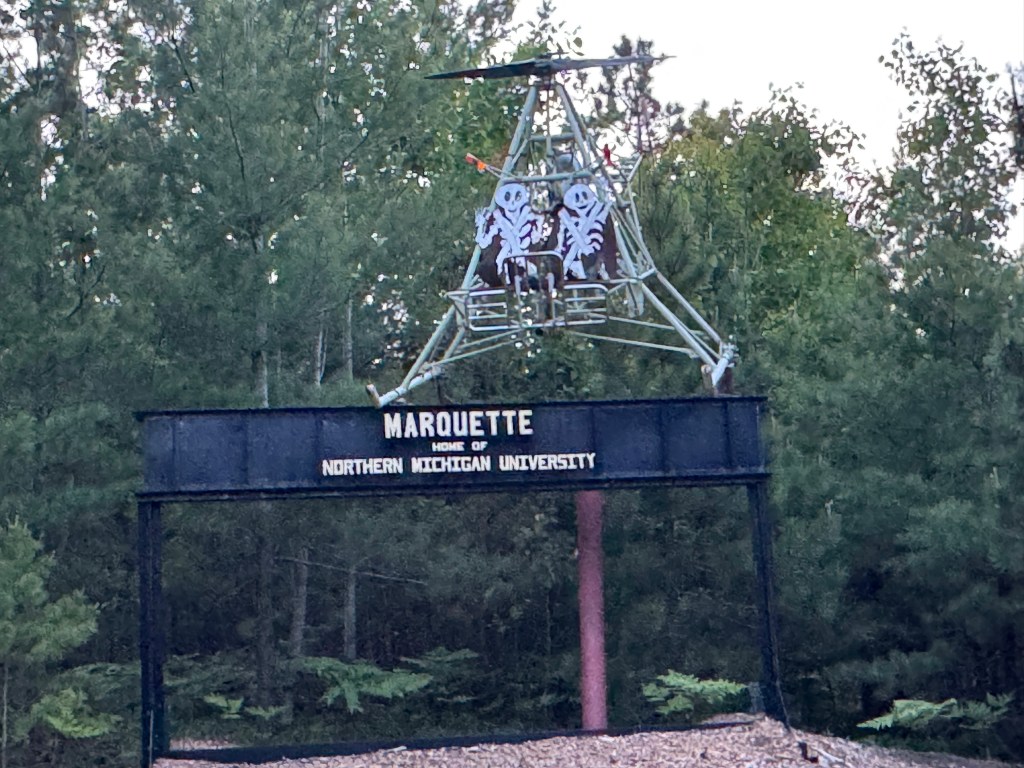
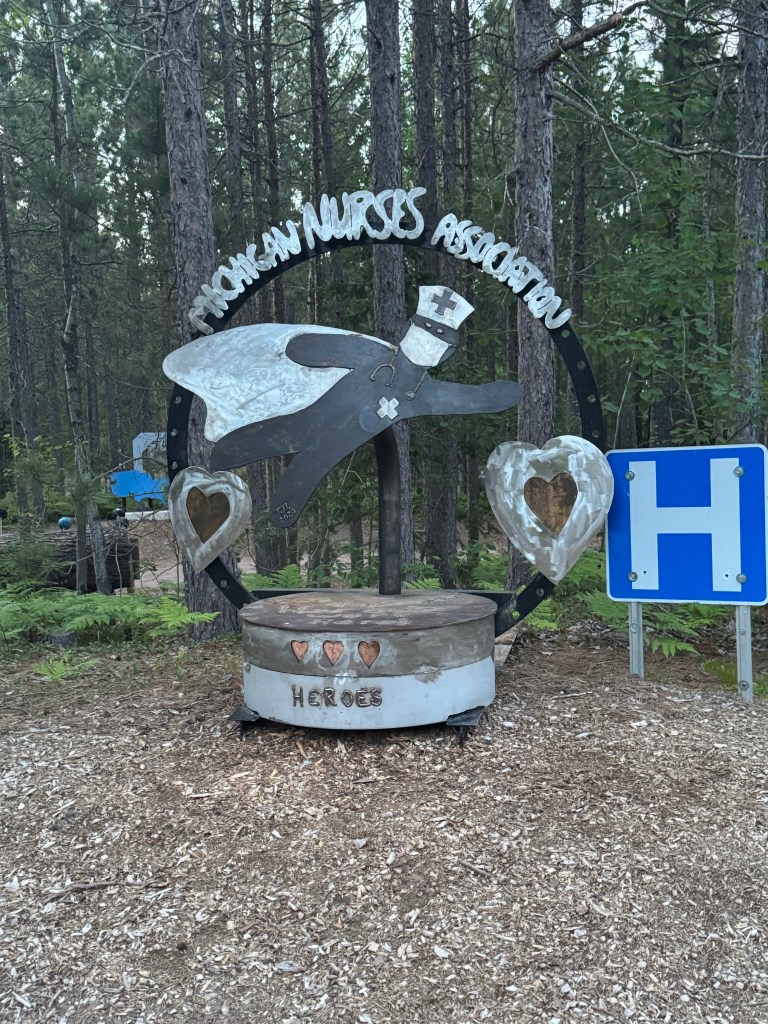
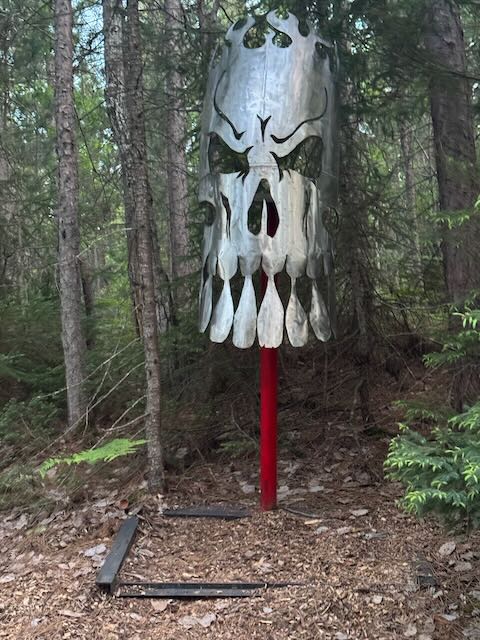
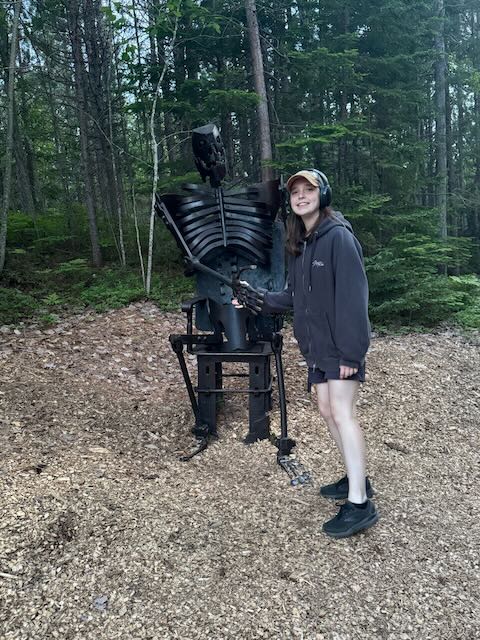
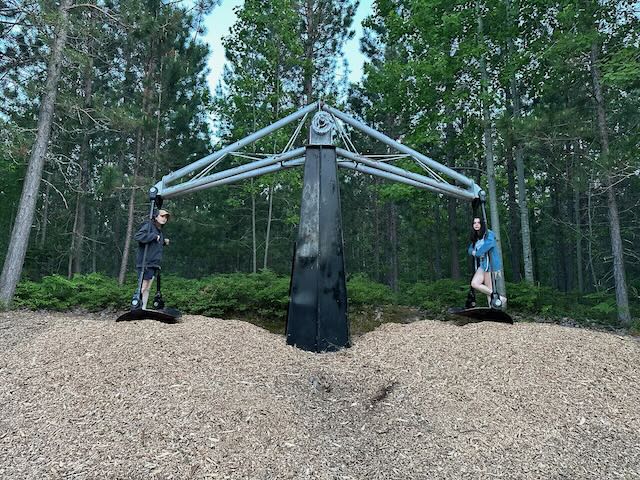
To top off the day, after showers and dinner back at the campground, we drove seven miles down the road to Lakenenland, a scrap metal sculpture park created over the past 25 years by iron worker, Tom Lakenen. The park has over 100 sculptures that range from whimsical to political and is free to the public. You can walk or drive the trails in the warmer months and get around by snowmobile in the colder months.
We ended up at Lakenland at around 9:30 PM – and it was still light out. We took one of sculpture loops by foot, but the mosquitos got the better of us, so we hopped in the Mini and drove around the other loops. Not only is the size of the park impressive, but the variety of the sculptures and the other amenities the park offers, such as concert stages, a pavilion, a playground, and at-shirt shack. We like the weird and wonderful roadside attractions and this one did not disappoint!
We leave tomorrow for our most rustic campground of the trip – the Presque Isle Rustic Campsites, located in the Porcupine Mountains State Park. No generators allowed, so we re crossing our fingers for sun to power our solar panels that recharge our batteries!
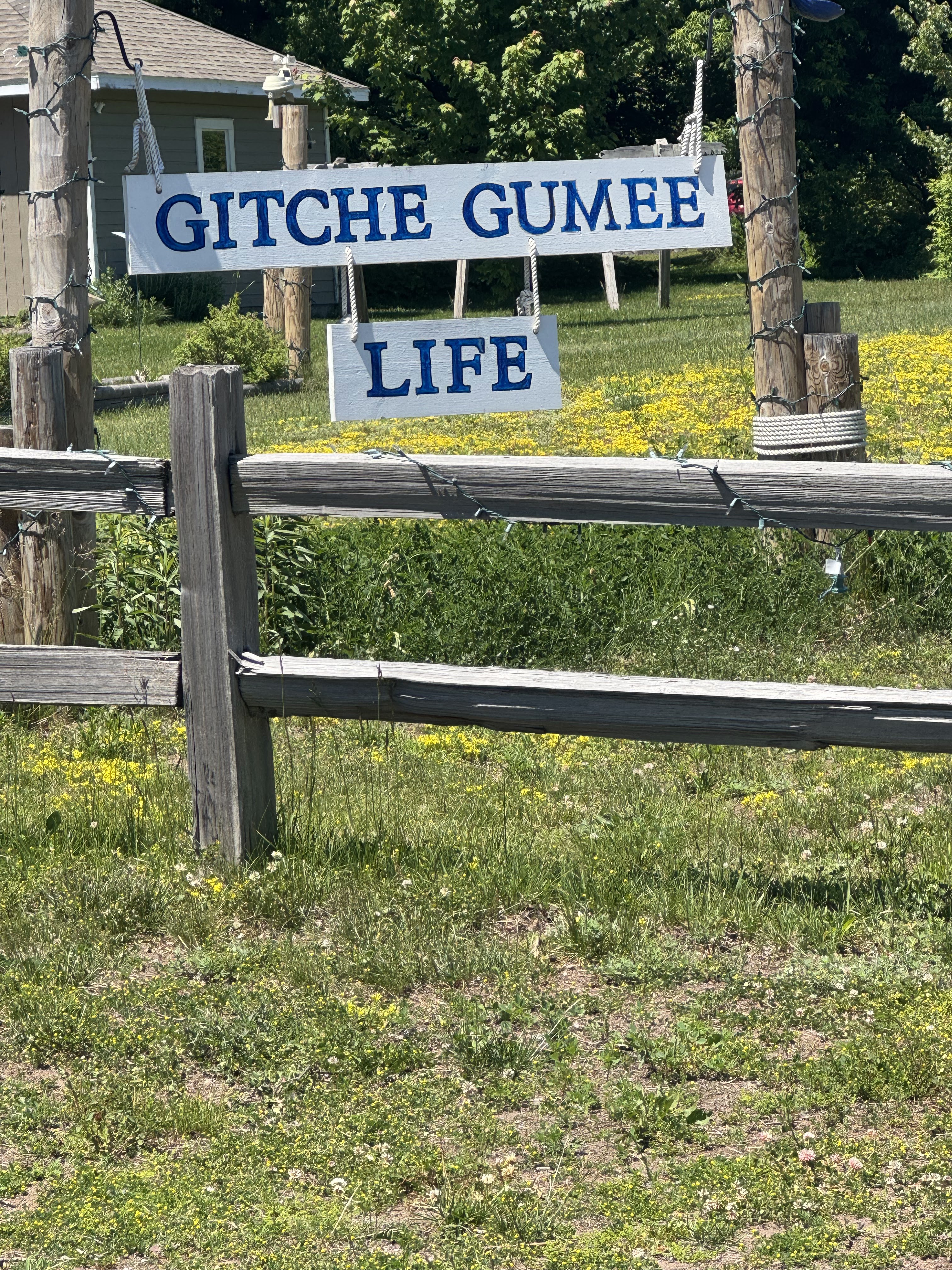
NOTE: Over the past few days, we have learned a bit about this region and its relationship to a famous American poem. In 1855, Henry Wadsworth Longfellow wrote his poem, Song of Hiawatha, about a fictional Ojibwe warrior’s life and love. The poem begins, “By the shore of Gitche Gumee, By the shining Big-Sea-Water”, the Gitche Gumee is the Ojibwe name for Lake Superior. Many cottages, stores, and lodging in the area bear the name. “Gitche Gumee.” The Tahquamenon River, which we visited earlier in our trip, is actually the setting for the poem.