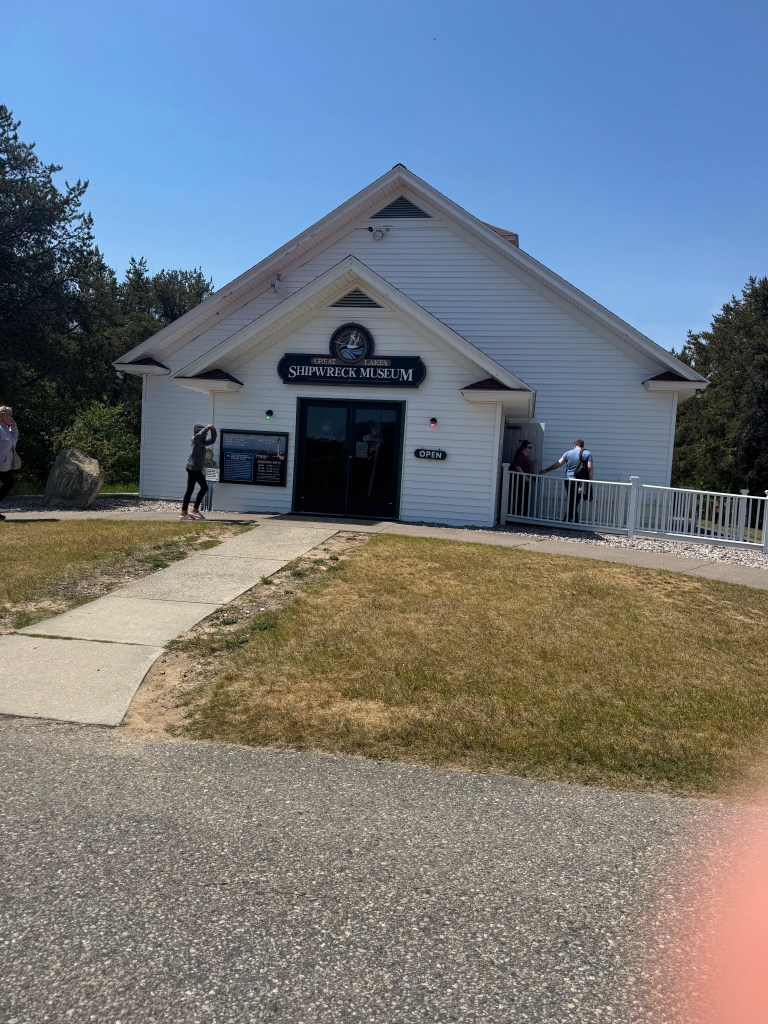
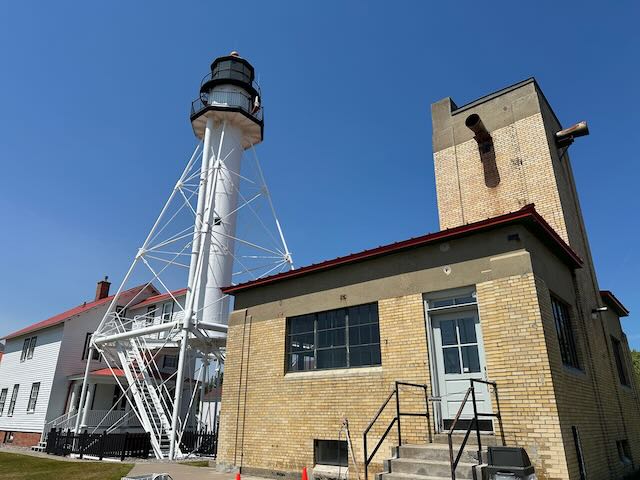
If you know me, you know that I am an educator through and through. Wherever I am I look for an opportunity to learn something new. Vacation is no exception. I give my parents credit for this quirk. (You may remember our fun-filled trip through colonial Williamsburg back on 2024.). And so, we departed Rivermouth Campground and headed to the Great Lakes Shipwreck Museum at Whitefish Point in Paradise, MI.
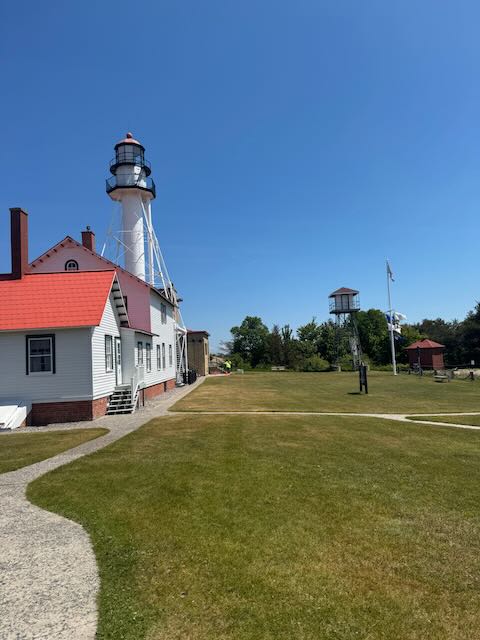
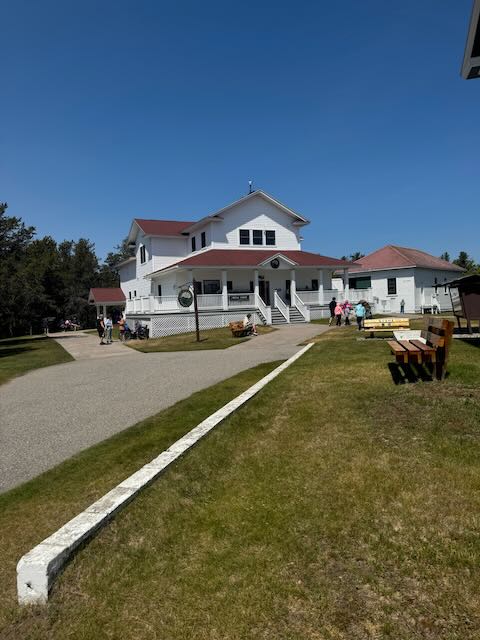
Since the Great Lakes are such vast bodies of water that function like inland seas, they fall under the term “maritime.” The lakes have rolling waves, strong currents, and support a massive shipping industry that is directly connected to The U.S.’s economy and culture. The Great Lakes have their own weather systems and, together with the St. Lawrence Seaway, act as an international marine highway connecting major American and Canadian ports to the Atlantic Ocean. In fact, massive freighters carrying millions of tons of raw materials such as iron ore, coal, and limestone cross the lakes annually. By the time European fur traders had started using the Great Lakes for trading, Native Americans had been traversing the enormous bodies of water for 10,000 years. Shipping grew exponentially by the 1800s, increasing traffic on the Great Lakes.
That combination of increased shipping and sea-like characteristics meant shipwrecks. There are an estimated 6,000-10,000 shipwrecks scattered over the five Great Lakes. The Great Lakes Shipwreck Museum tells the story of commerce across the Great Lakes region and boasts artifacts salvaged from wreck sites as well as photos and other memorabilia that help visitors understand the lives of the sailors, life-savers, and lightkeepers who dedicated their lives to their professions. The volunteers who work at the Shipwreck Museum love their jobs. They are keepers of history and love to talk about the rich legacy and traditions, and most will sneak in a good ghost story. It is my understanding that every lighthouse is haunted. This is probably because being a lighthouse keeper in “days of yore” would induce madness in a person due to the monotony and the solitude.
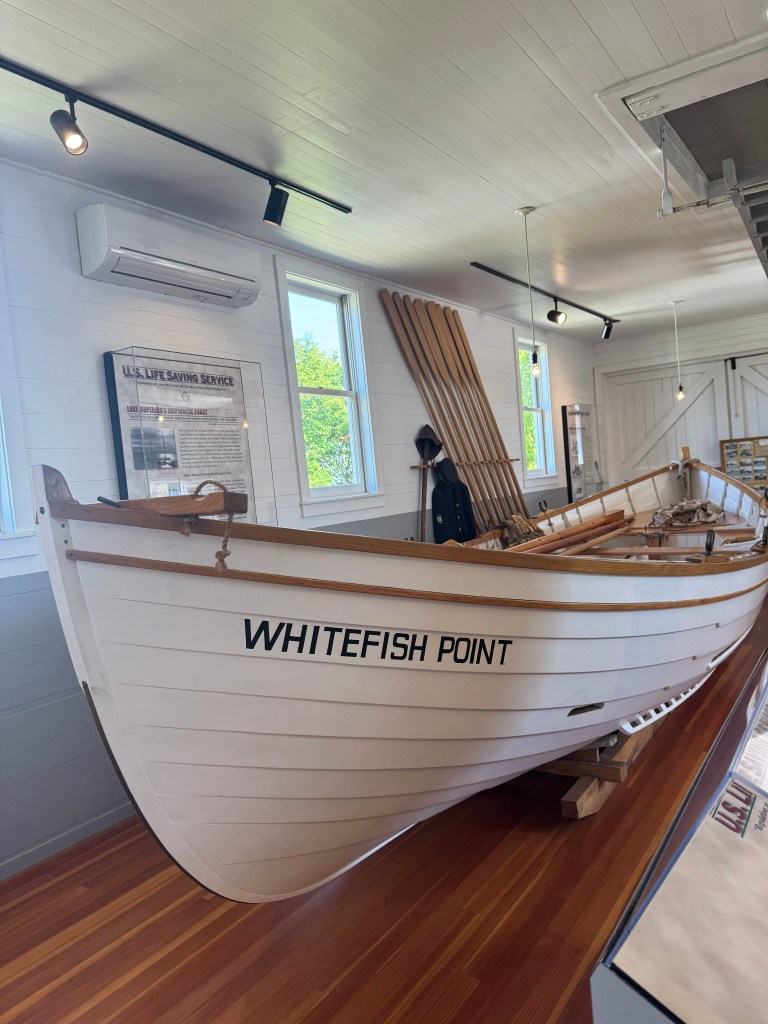
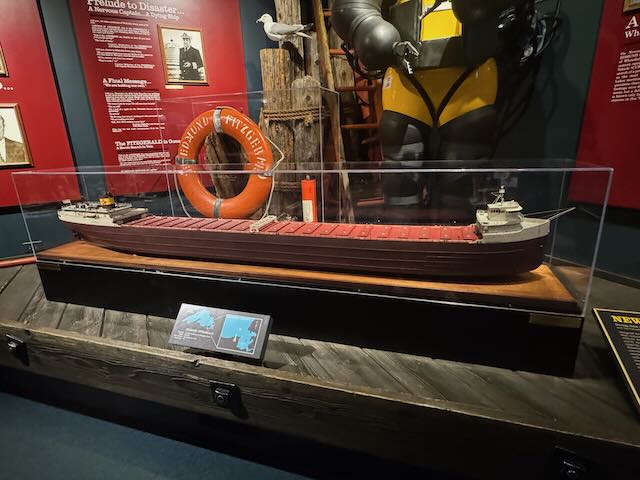
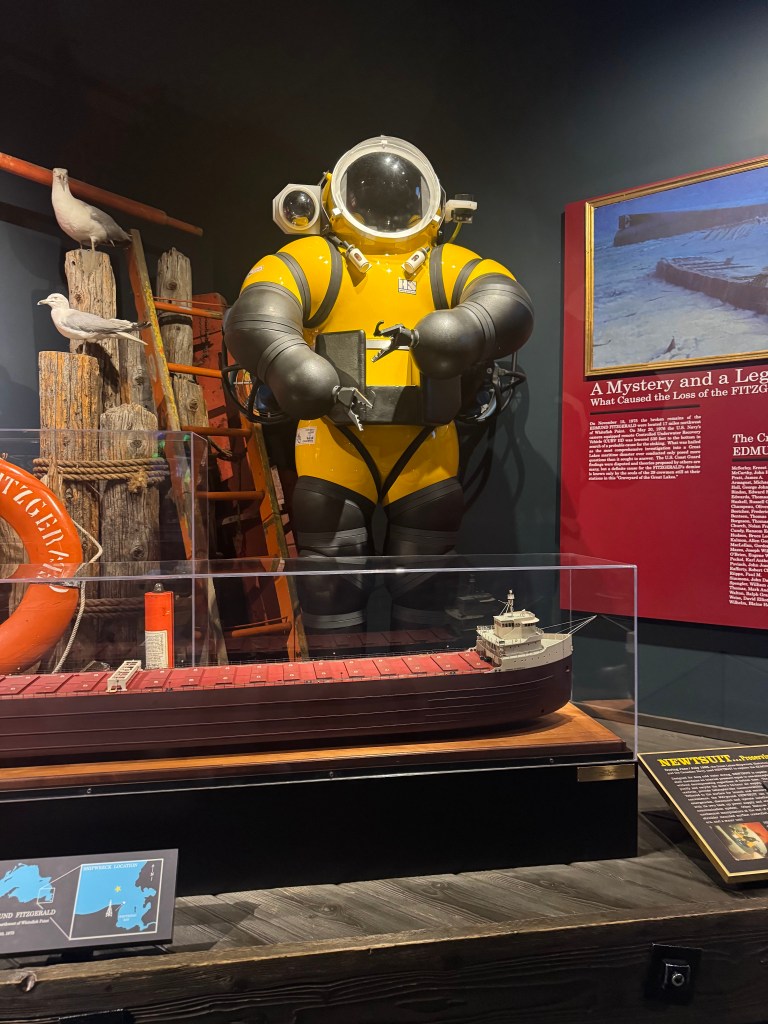
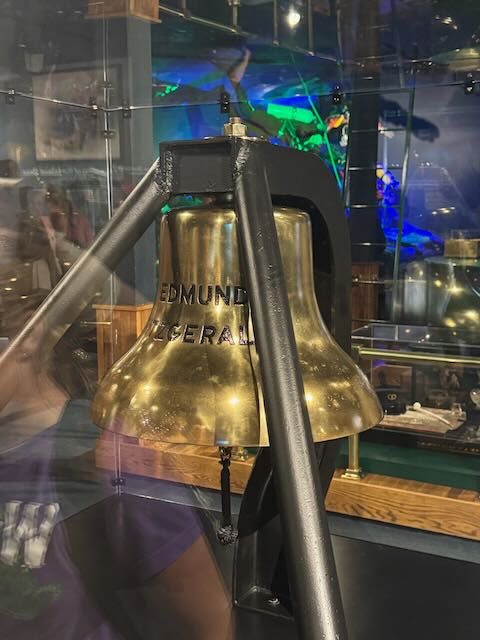
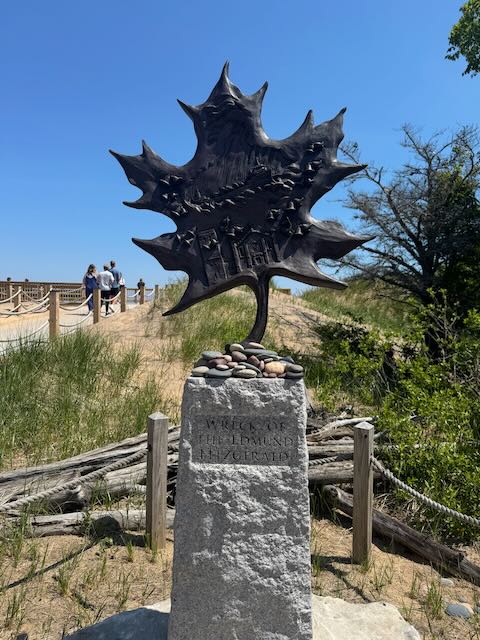
Perhaps the most famous wreck is that of the SS Edmund Fitzgerald which sank mysteriously in Lake Superior on November 10, 1975 during a severe storm. All 29 crew members perished and the sinking is considered the largest maritime disaster in Great Lakes History. What makes it especially heartbreaking is how recent this shipwreck occurred and just how suddenly the ship went down. The wreck now lies 530 feet below the surface in two pieces in Canadian waters, about 17 miles off Whitefish Point, MI. In 1995 the bell from the Edmund Fitzgerald was raised from the wreck and replaced with a bell engraved with the names of every crew member. Canadian singer, Gordon Lightfoot, recorded a ballad recounting the wreck, Wreck of the Edmund Fitzgerald. This song is pumped into every building throughout the museum. If you walked into the museum not knowing the words, you would definitely be humming it on the way out… and throughout the rest of the day… and for the next several days.
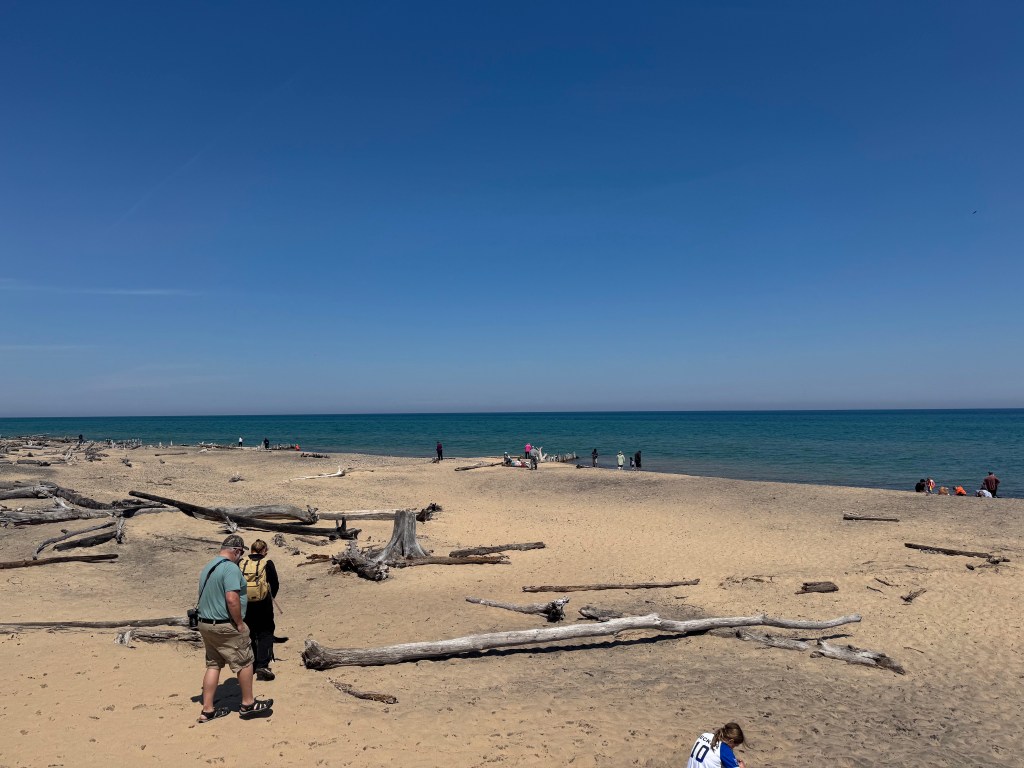
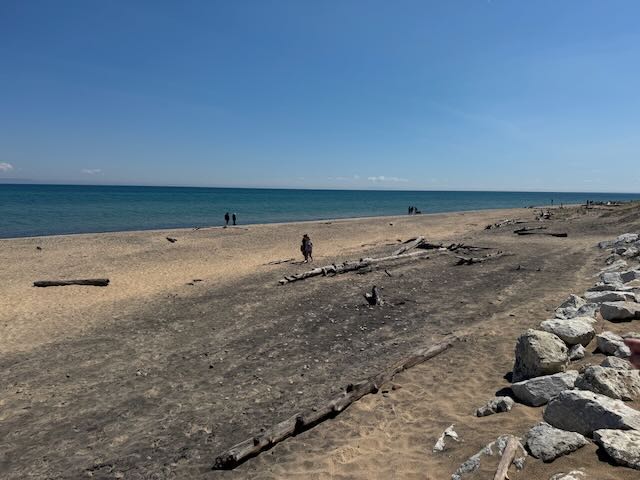
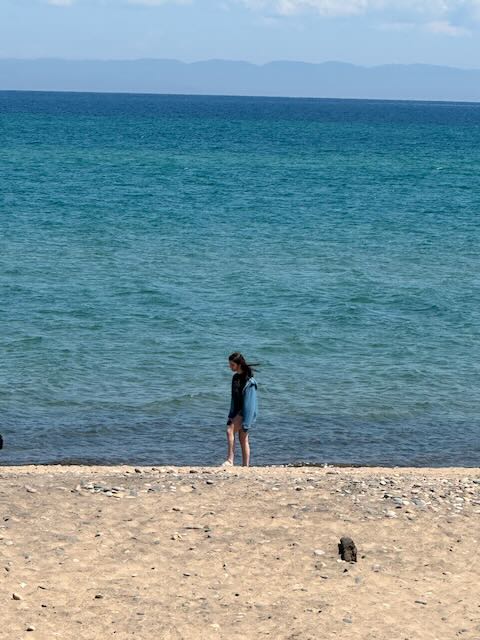
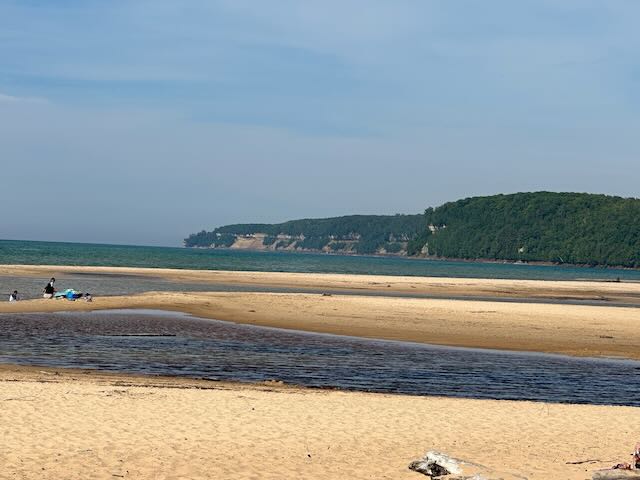
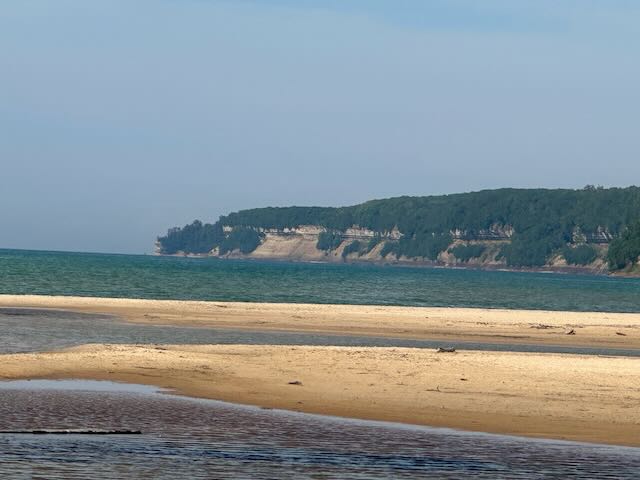
After a quick camper lunch, we headed to Musining, where we parked Kevin in the Pictured Rocks Visitor center, detached Elizabeth and scooted out to explore the National Lakeshore. We needed a National Park Visitors Pass to access the various trailheads and parking areas along the coast. We chose a few easy trails with stunning views of the sandstone cliffs, sandy and rocky beaches, and crystal clear water, as well as forests, waterfalls and marshes.
The Pictured Rocks run about 15 miles along the lakeshore. You can see them via observation platforms, boat tours or kayaks. We opted to drive between locations so that we could experience a little bit of everything this area had to offer.
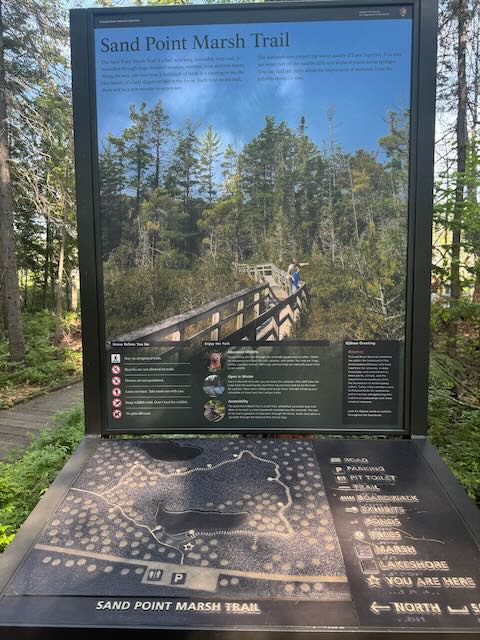
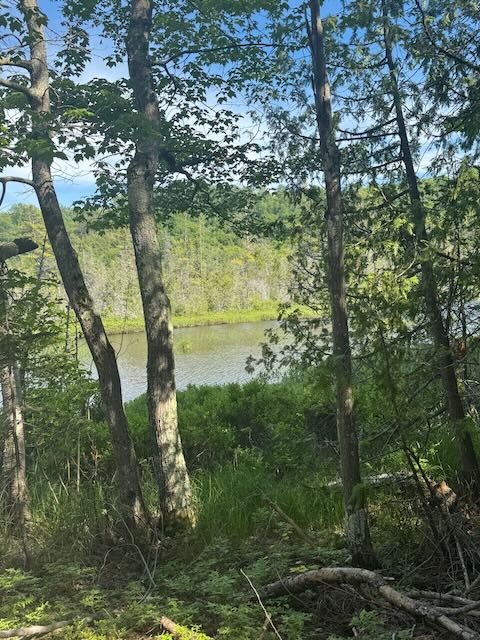
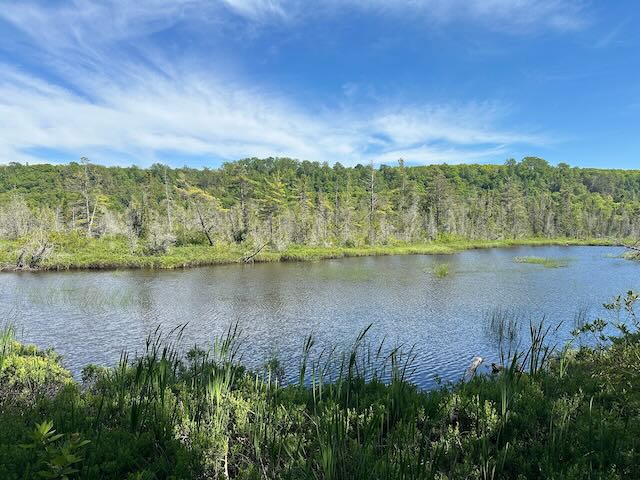
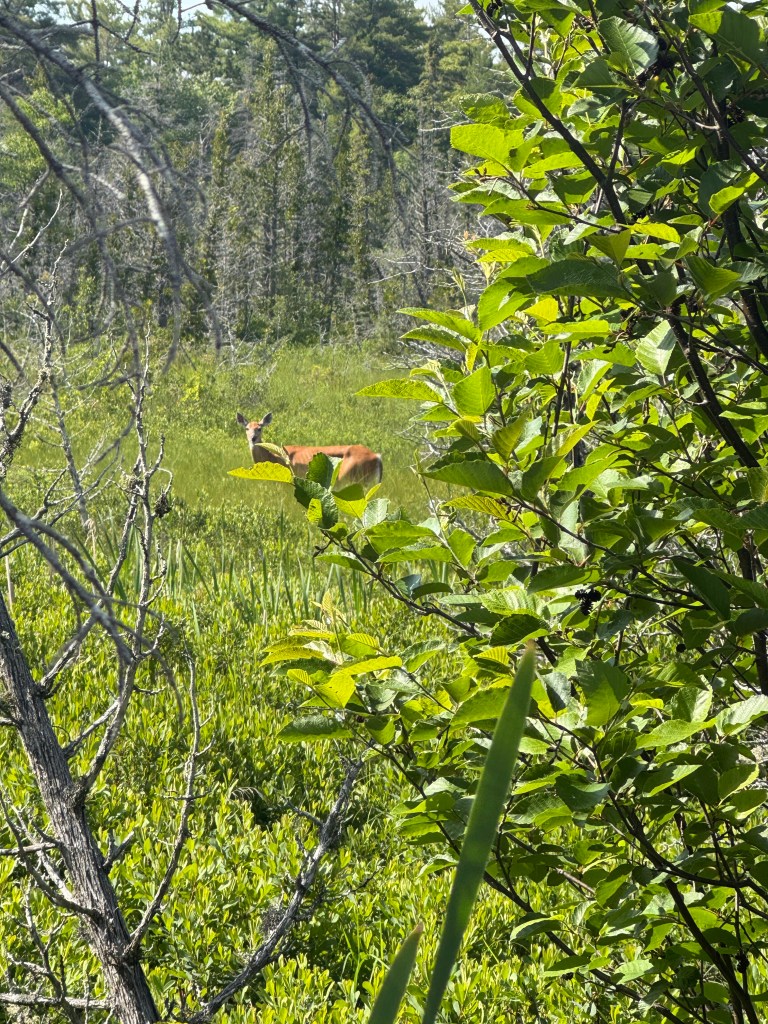
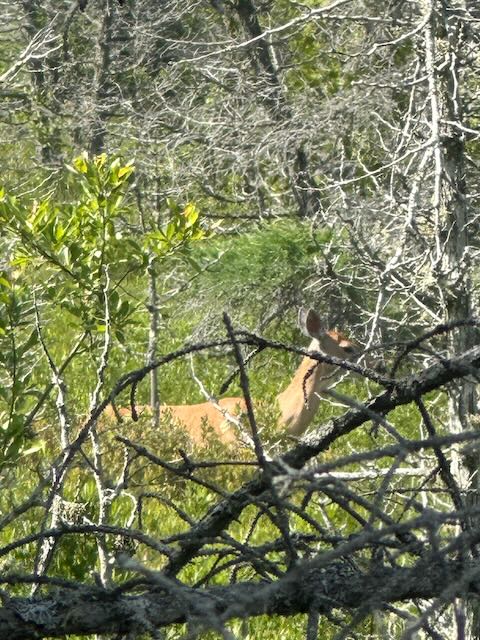
The weather on the UP has been simply incredible (except for the relentless mosquitos at dusk), warm and sunny during the day, with temperatures around 70 degrees and a light breeze. This was perfect for our marsh walk. A half-mile boardwalk wound in and out of a marsh and forest where we spotted a variety of birds and even a white-tailed deer. The quiet here is astounding. You can hear every splash, flap, and chirp. We didn’t see any other people during this leg of our trip.
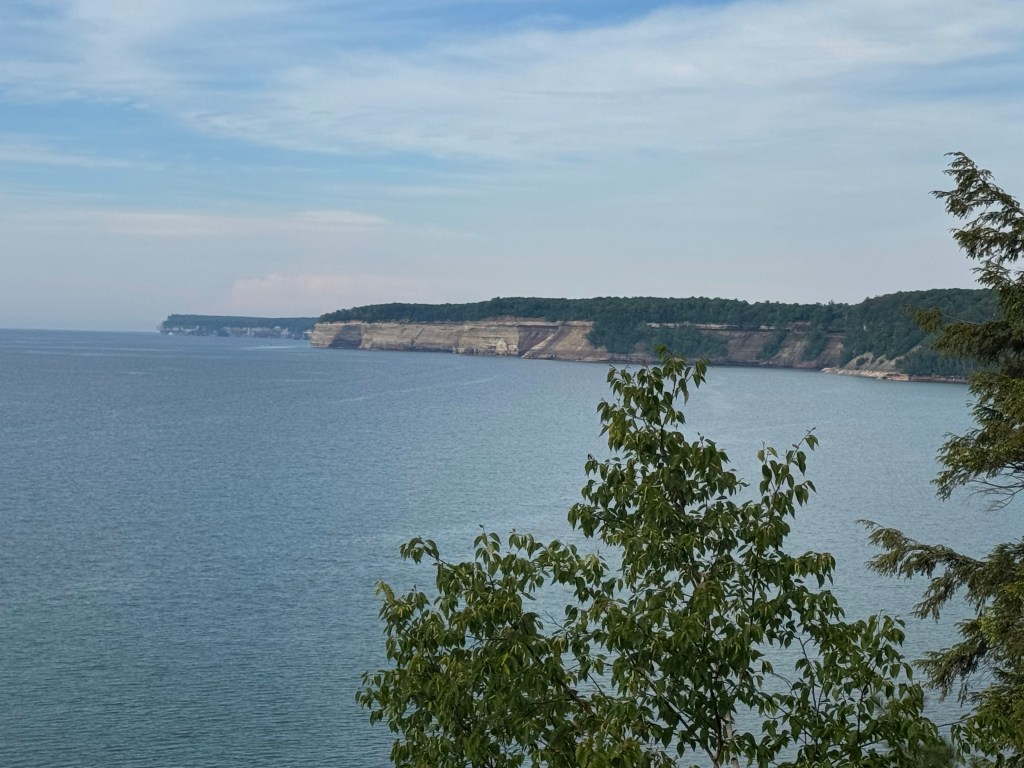
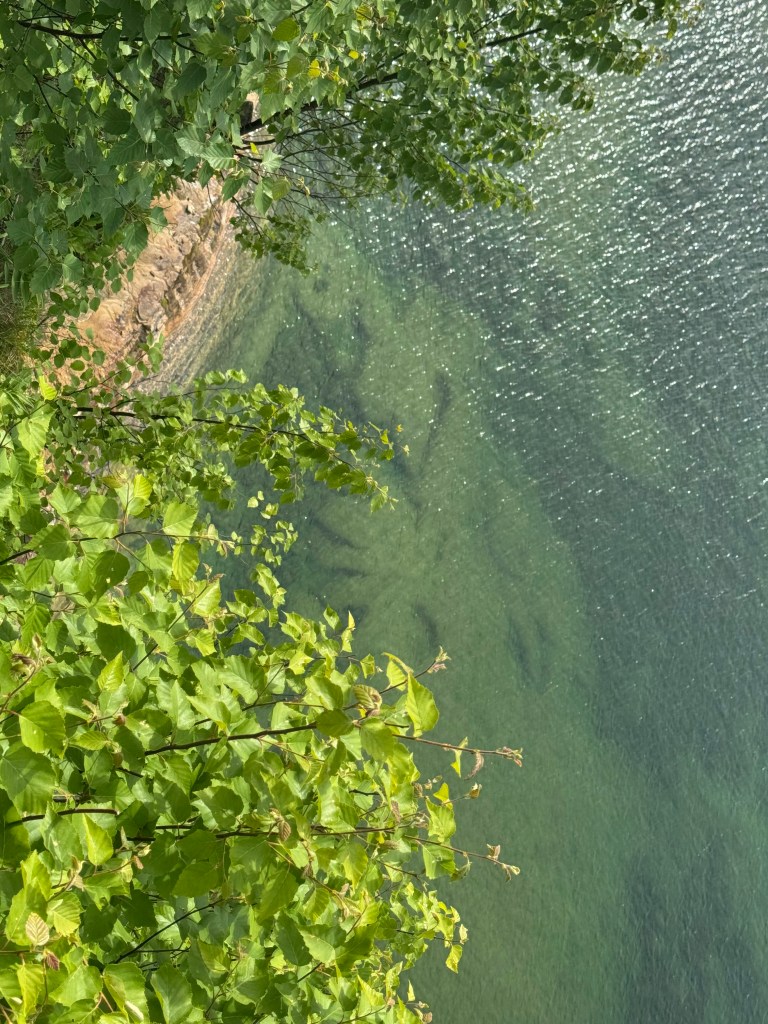
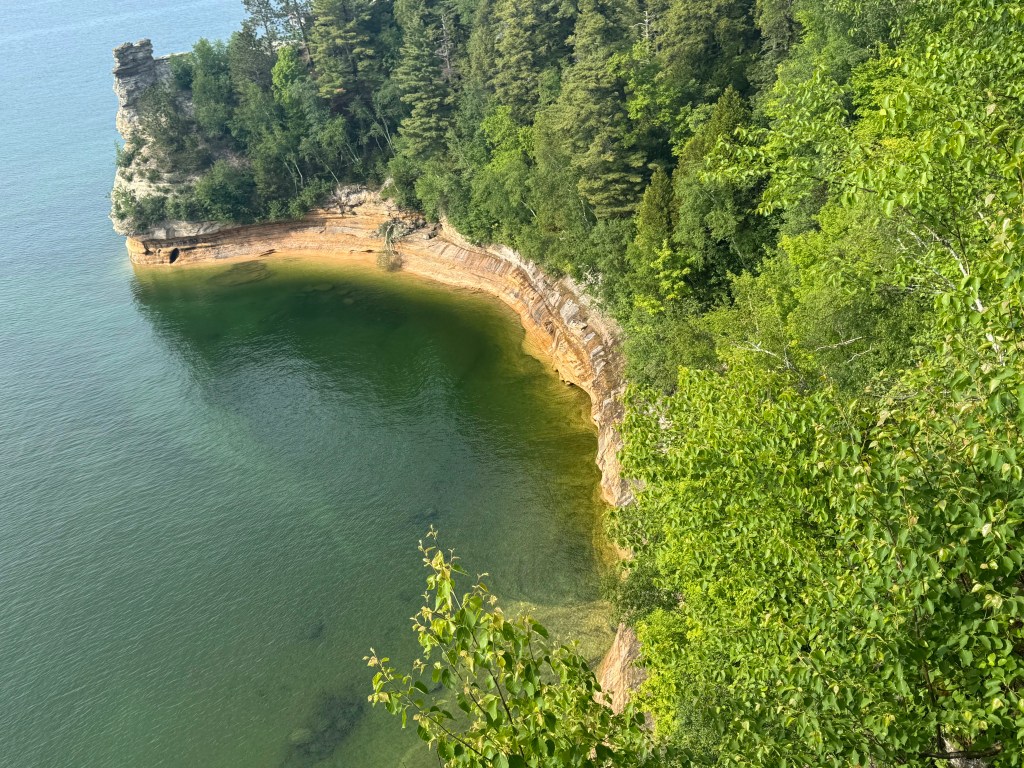
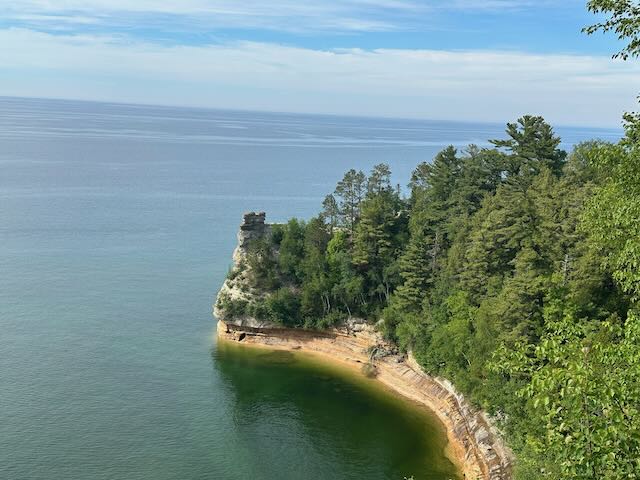
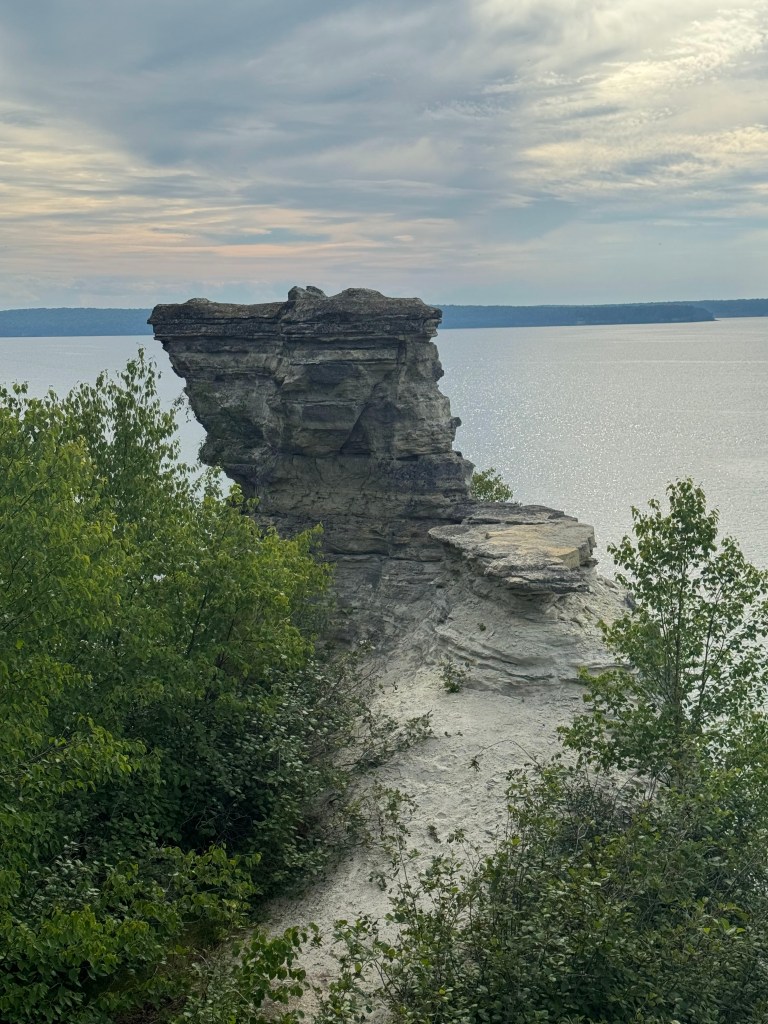
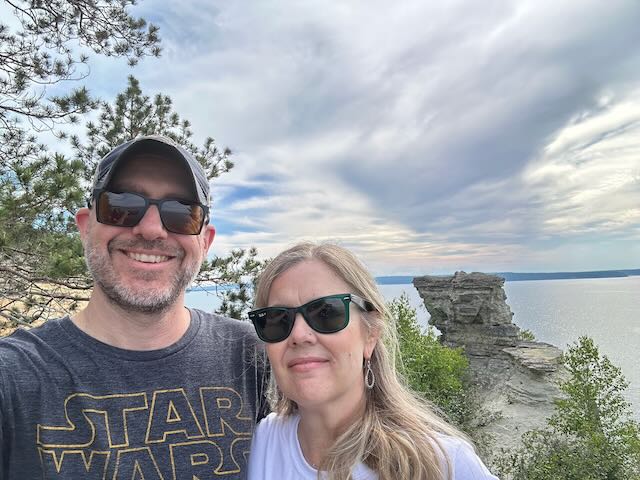
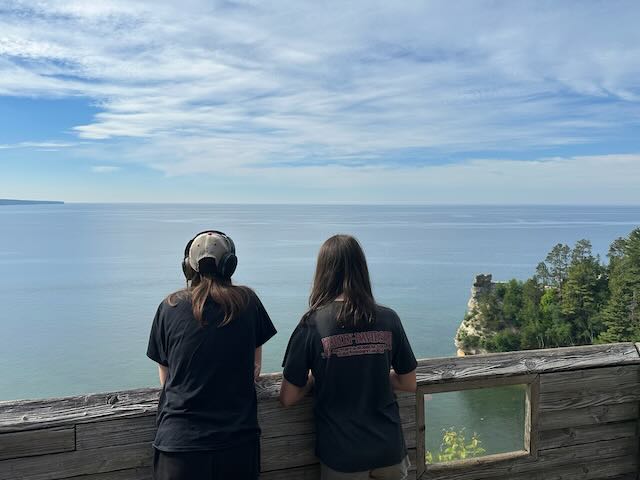
Miners Castle was next on our list. We took a short path down to the observation platform and looked out over massive sandstone cliffs and the unique rock formation known as Miners Castle. Erosion is constantly changing the face of the cliffs. In fact, the “castle” had two turrets that collapsed about 20 years ago, changing the look of this iconic formation. Rob got a little queasy looking over the rail of the deck – to be fair, the cliffs are steep and at the bottom is a giant pile of rocks. Looking out at the water, you might think you were somewhere tropical by the jewel-toned blues and greens. But make no mistake, Lake Superior is not tropical. With an average temperature of 40 degrees, it is the coldest of the Great Lakes.
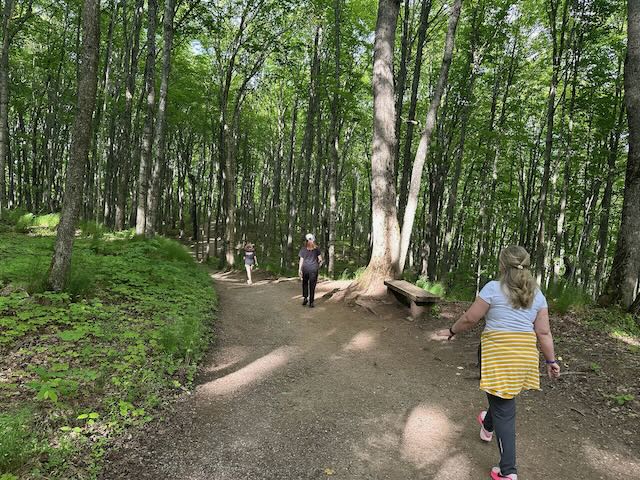
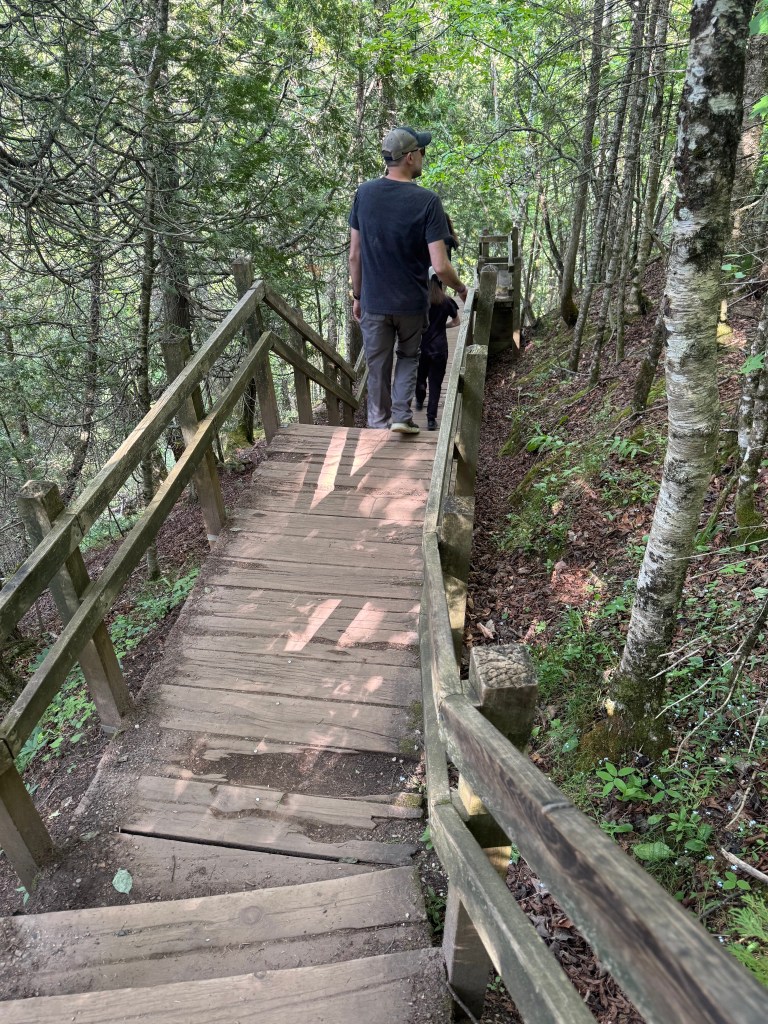
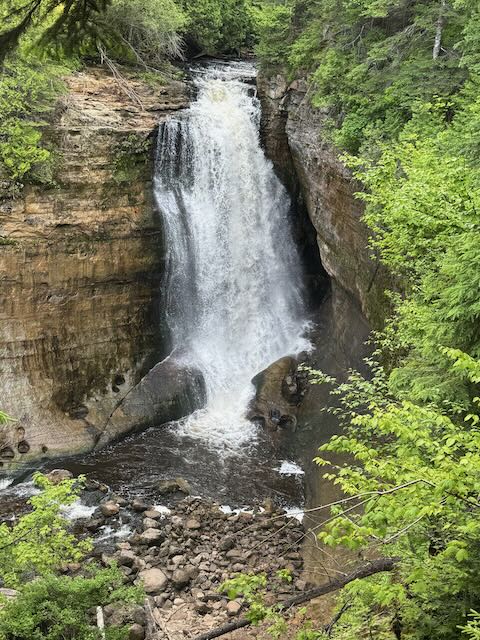
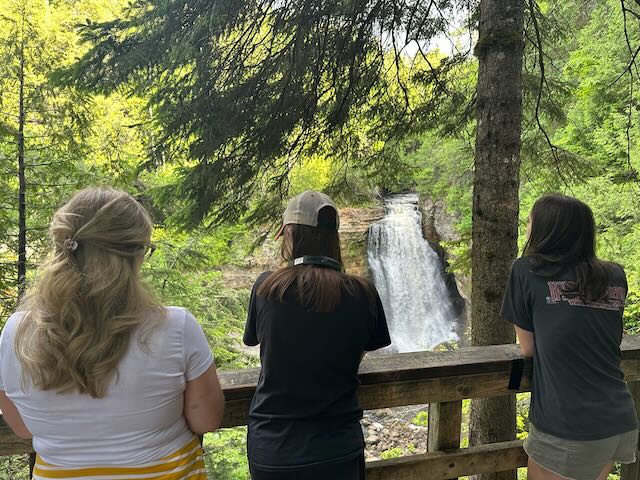
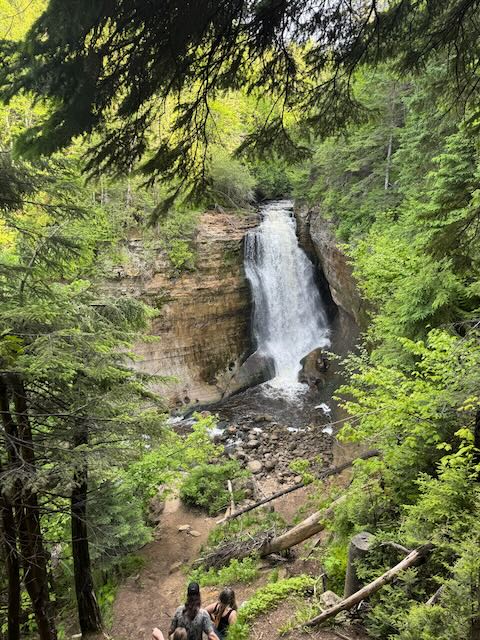
Our last stop for the day was Miners Falls. We followed a rugged path through the woods, navigating roots and rocks over about a mile. Sixty-four wooden steps lead to the lower viewing platform where you can see the falls, which drop over 50 feet. Beautiful. Even though there were more people on this excursion, it still did not feel crowded. That the UP has so much natural beauty, but doesn’t feels overrun with tourists is why we are slowly falling in love with this place.
By the time we reached Chocolay River RV & Campgrounds in Marquette, it was past 9:00 PM, but still light outside. Not just a little light – the sun had still not set. This campground is made for people who will spend very little time at the campground (perfect for us). It’s located next to the Northern Michigan University Golf Course, in a residential neighborhood. There are approximately 40 sites with picnic tables, fire pits, and full hookups (yay for long, hot showers!) lined up in three neat rows. A new section of at least 40 more sites is being prepared. We think this is a year-round campground because there are so many snowmobile trails running close by.
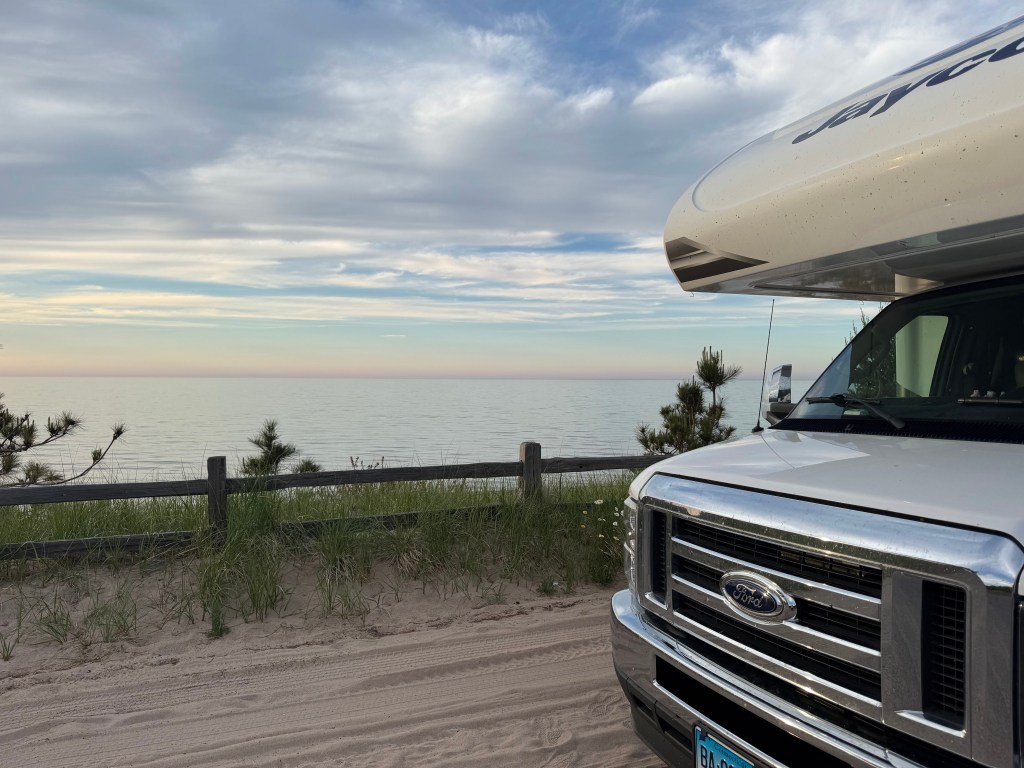
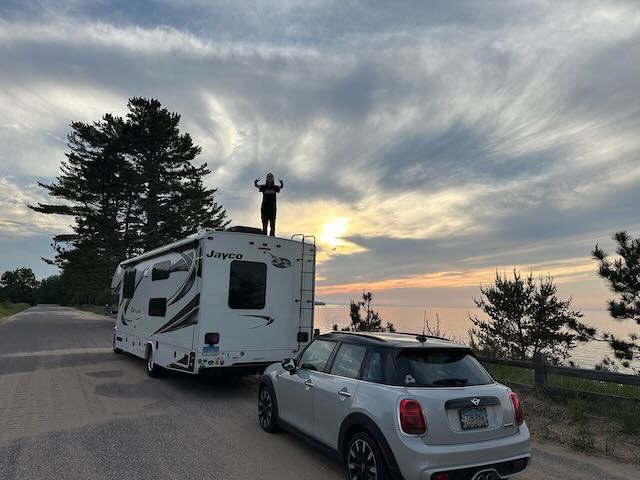
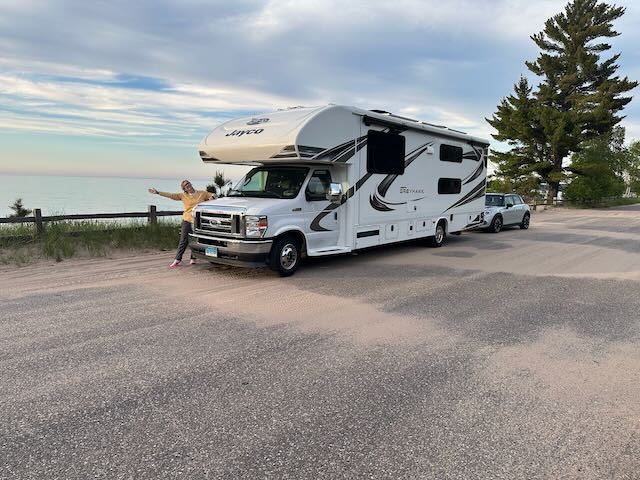
Tomorrow we explore Marquette and just might take a dip in Lake Superior. But for now, I’m putting on my sleep mask and calling it a night!
 Wandering, But Not Lost