Leaving Marquette, we mentally prepared ourselves for a couple of days, essentially, “off the grid.” With our water tank full, gray and black tanks empty, and solar panels, we felt confident that we would be totally prepared for our time in the Porcupine Mountains, located in the Northwestern part of the UP. Porcupine Mountains Wilderness State Park is Michigan’s largest State Park at 60,000 acres. Made up of old growth forest, rivers, Lake Superior shoreline, waterfalls and hiking trails, the park is a popular destination on the UP. The Mountains get their name from the native Ojibwa people who thought their outline against the setting sun reminded them of kag, the woodland porcupine. They called them Kag-wadjiw, the Porcupine Mountains.
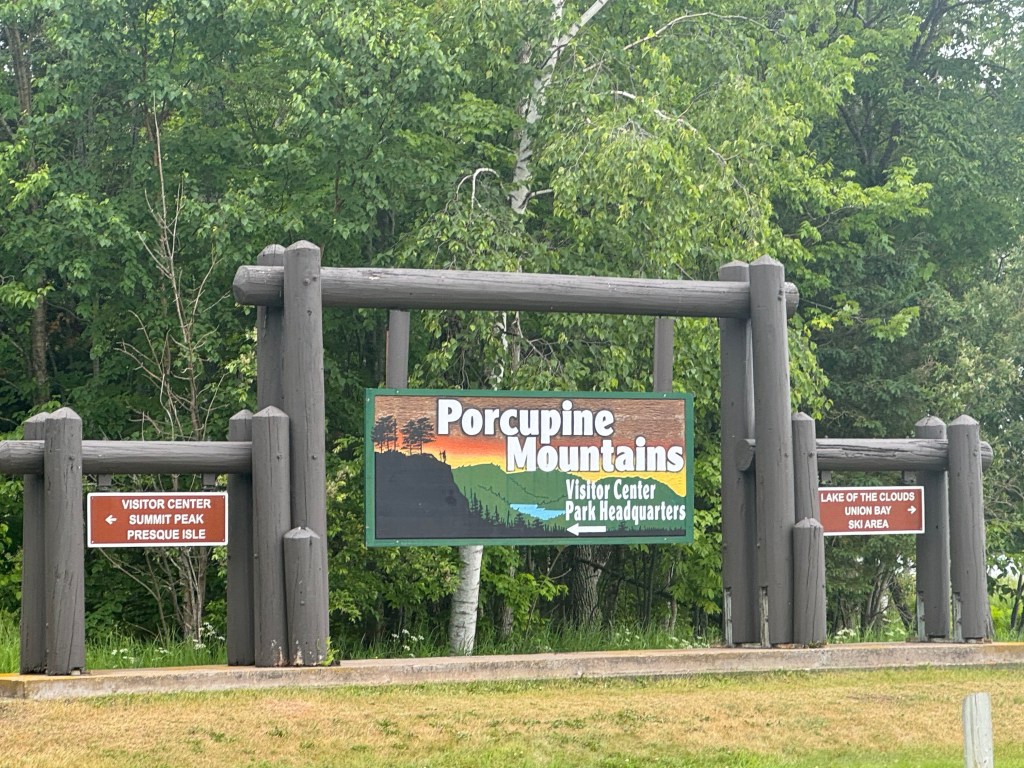
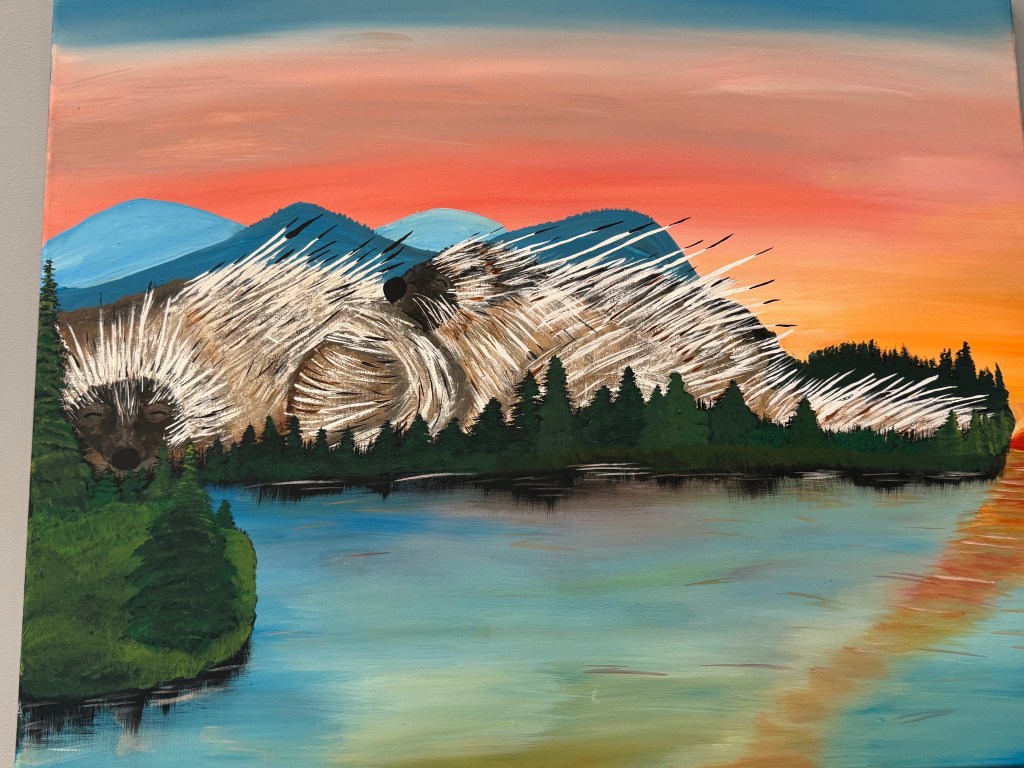
After a quick stop at the Visitor’s Center where we grabbed a couple of maps, scoped out some day-hikes, and got directions to our campground from the park rangers, we headed toward our campground – the furthest campground from the park’s entrance.
When we chose the Presque Island Rustic Campground in “the Porkies,” as they are fondly known, we did so with complete confidence. No generators permitted, gorgeous views of the river, plenty of scenic waterfall trails walkable from the campsite, and some of the darkest skies in the UP, meaning the stars would be brilliant across the night sky. Our campground was located about 30-minutes from the Park’s entrance. We drove along a thickly canopied paved road, marveling at how dense and green the forest was. We rolled into the campground mid-afternoon, using our Recreation passport to enter. Rustic? Yes. Not even the ranger hut had electricity. We had a spacious corner site with a picnic table and large metal fire ring. Without cash, we couldn’t purchase firewood, so we made a mental note to grab some while we were out and about. We don’t bring our own firewood to campgrounds, especially when we are out of state. Most campgrounds prefer you purchase their wood (or at least local wood) so you won’t bring in any invasive species that could harm the local environment. About a third of the campsites were occupied, a combination of tents, trailers, and RVs. So peaceful, so charming.
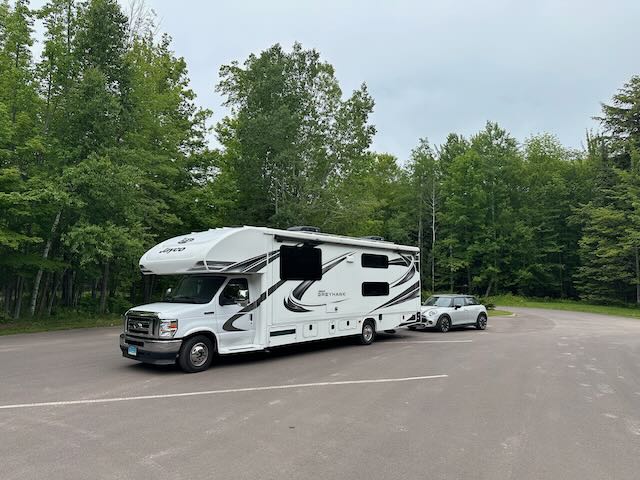
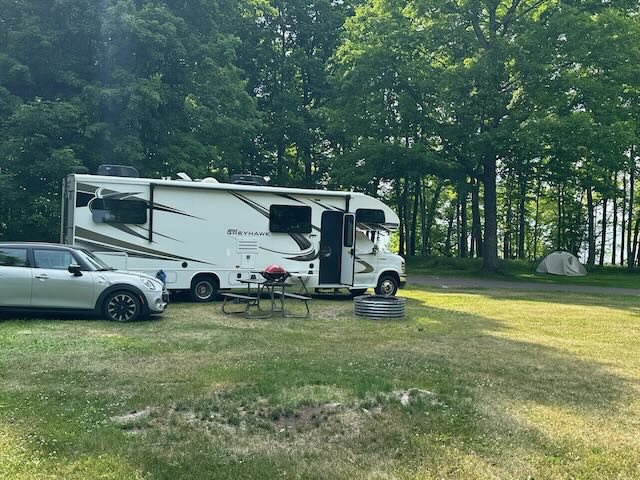
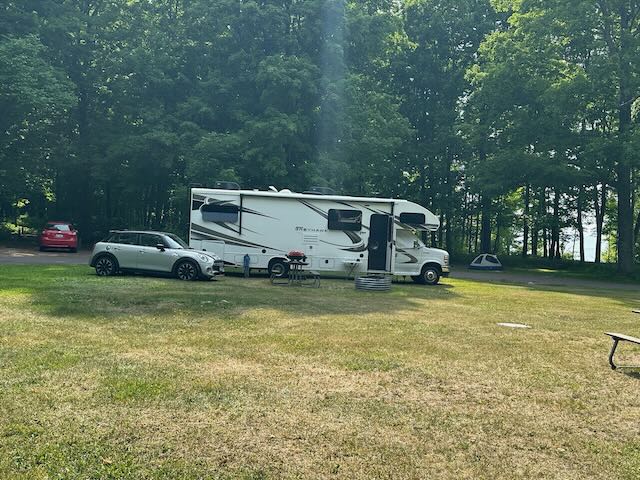
And then we opened the door to the camper.
Upon stepping out of the camper, we were immediately swarmed by black flies. They covered the hood and doors of the Mini and clustered on the screen door. They landed on our arms, legs and faces. As if the sheer number of flies wasn’t bad enough, they also bit! Rob and I must have looked insane as we jumped around, waving arms and slapping at ourselves, trying to protect our bodies from a thousand little pinpricks. As soon as we disconnected the Mini, we scrambled back inside, realizing that in the 2.5 seconds we had the door opened, we had let in about 20 of these monsters. Picture two grown adults swatting flies with rolled up maps and pamphlets while simultaneously squawking and trying not to get their ankles bitten.
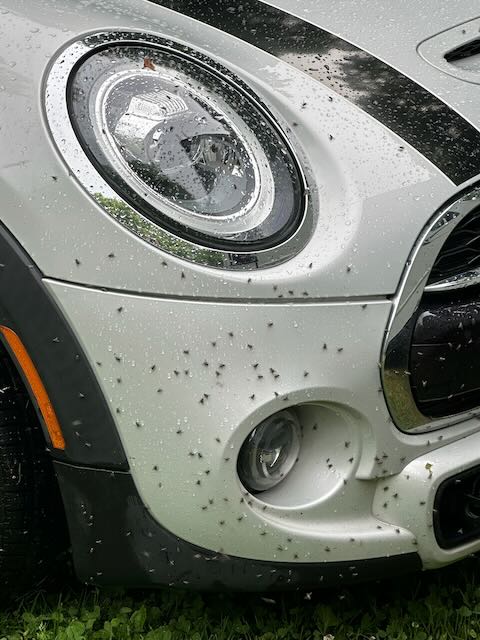
Having temporarily relieved ourselves of these pests, we did what anyone else might do in this predicament – we Googled it. Marlie found out that there were probably three types of insects: house flies, stable flies (the biters), and mosquitos, and that they were most prevalent at dawn and dusk, and near water sources. Regular bug spray was largely ineffective with them and burning a low, smoky campfire would be the best way to get some relief. Super. No cash = no wood. Our campsite was directly next to the river, the humidity was twice what it had been in Marquette, and it was around 5:00… not quite dusk, but that meant it would only get worse. Surely the flies weren’t everywhere in the Porkies and would most certainly disappear when it got darker and cooler, right?
Wrong. Determined to make the best of the situation, Marlie and Rob took an exploratory lap around the campground, circling down by the river. They came back after ten minutes full of red welts, reporting that the fly situation was worse down by the river. In fact, Rob said that, at one point, the back of Marlie’s shirt was completely black, covered with hundreds of flies. What were the tent campers doing? We could see them doing the same slapping and dancing as we were. The thought of being trapped in an airless tent, many with dogs or kids, gave me anxiety. Citronella candles and spraying the door and screen of the camper had little effect on the intensity of the flies. Even the smoke from our grill didn’t make much of a difference.
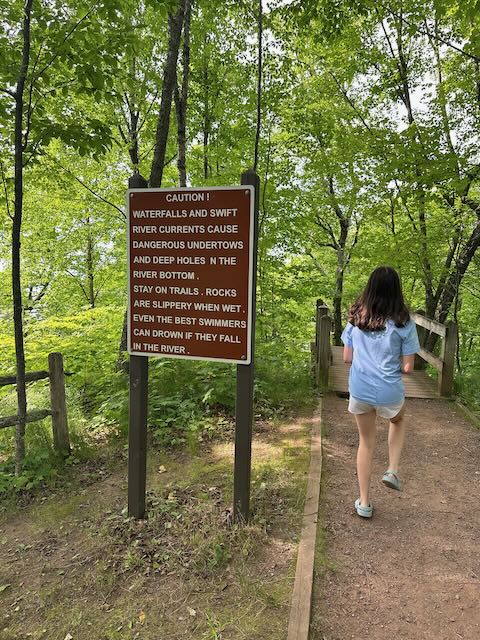
After dinner, Rob, Marlie, and I suited up in long pants and sleeves and headed to the waterfall trails near our campground. Alyssa opted to sit this one out (I mean, who could blame her?). Miraculously, the trail we chose was largely bug-free. Thank goodness, since we were definitely in the mood to move after our long drive. We climbed down a wooden walkway to a suspension bridge that spanned the Presque Isle River, giving us views of some smaller waterfalls. The water in this area is low, offering us a good look at the “potholes” in the river. The circular rock formations are created by sand swirling in the water, eroding the rock.
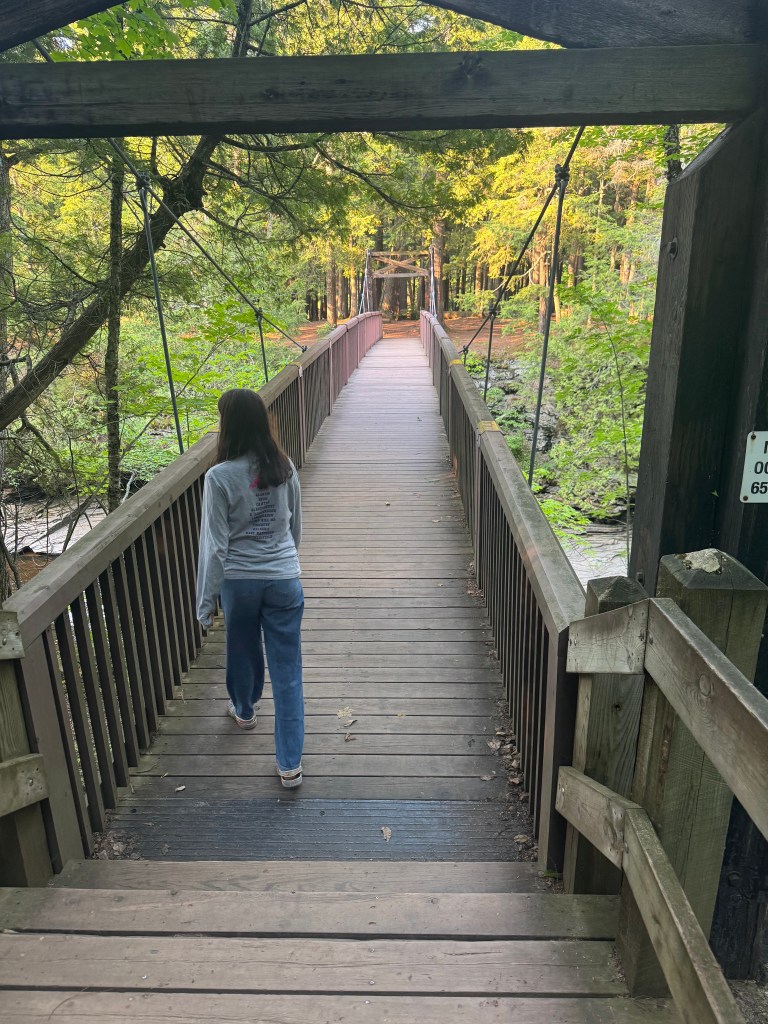
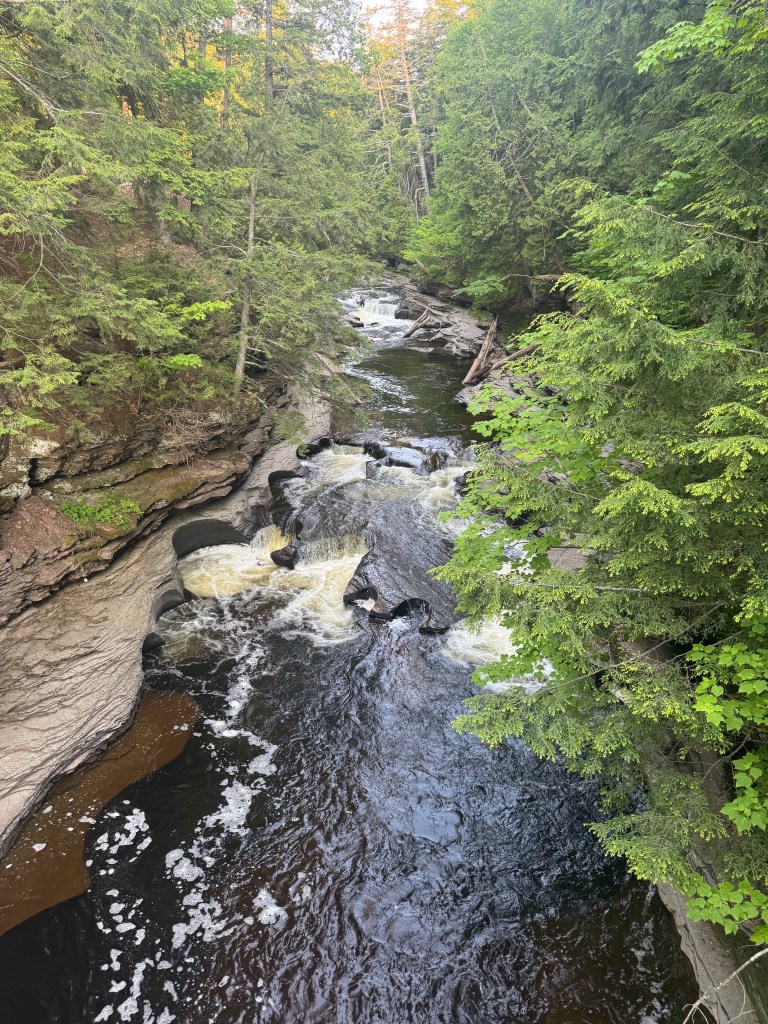
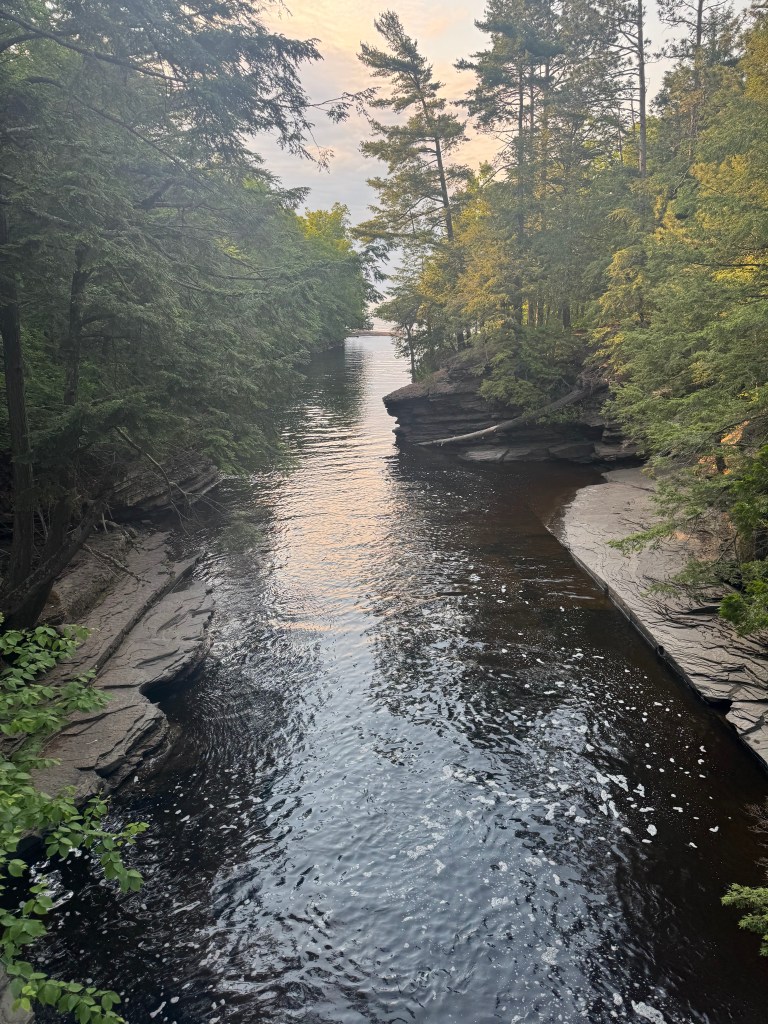
Heading down toward the rocky beach, we quickly discovered we had pressed our luck with the flies. Suddenly swarmed, we ended our hike and hightailed it back over the suspension bridge to the bug-free zone. Nope. Nope. Nope. Back to the camper. We’ll try again tomorrow.


That sounds horrible! I would have been inside the camper with Alyssa!
LikeLike